DAY 171 – 02/28/2013 – Sequoia National Park, CA

We are now in California, home of some of the largest trees in the world. The Giant Sequoias are right down the road from the Mojave Desert, in the Sierra Nevada mountain range.

OLYMPUS DIGITAL CAMERA

The Voyage of the Tramper has included some superlatives, for sure. And the ancient Sequoias are super big, super old organisms. They are majestic and dignified. The oldest trees are 2,700 years old (National Geographic scientists say they are even older)!

We were visiting Sequoia at the end of the winter. There was snow on the ground and a chill in the air. But the weather was sunny and clear.

OLYMPUS DIGITAL CAMERA

Visitors were few. Walk ½ mile into the woods on any trail and you are completely alone with the silent giants.

It was awesome to be among them. You look up and see the massive tree reaching for the clouds. Walk right up to any one of them for a closer inspection.

OLYMPUS DIGITAL CAMERA

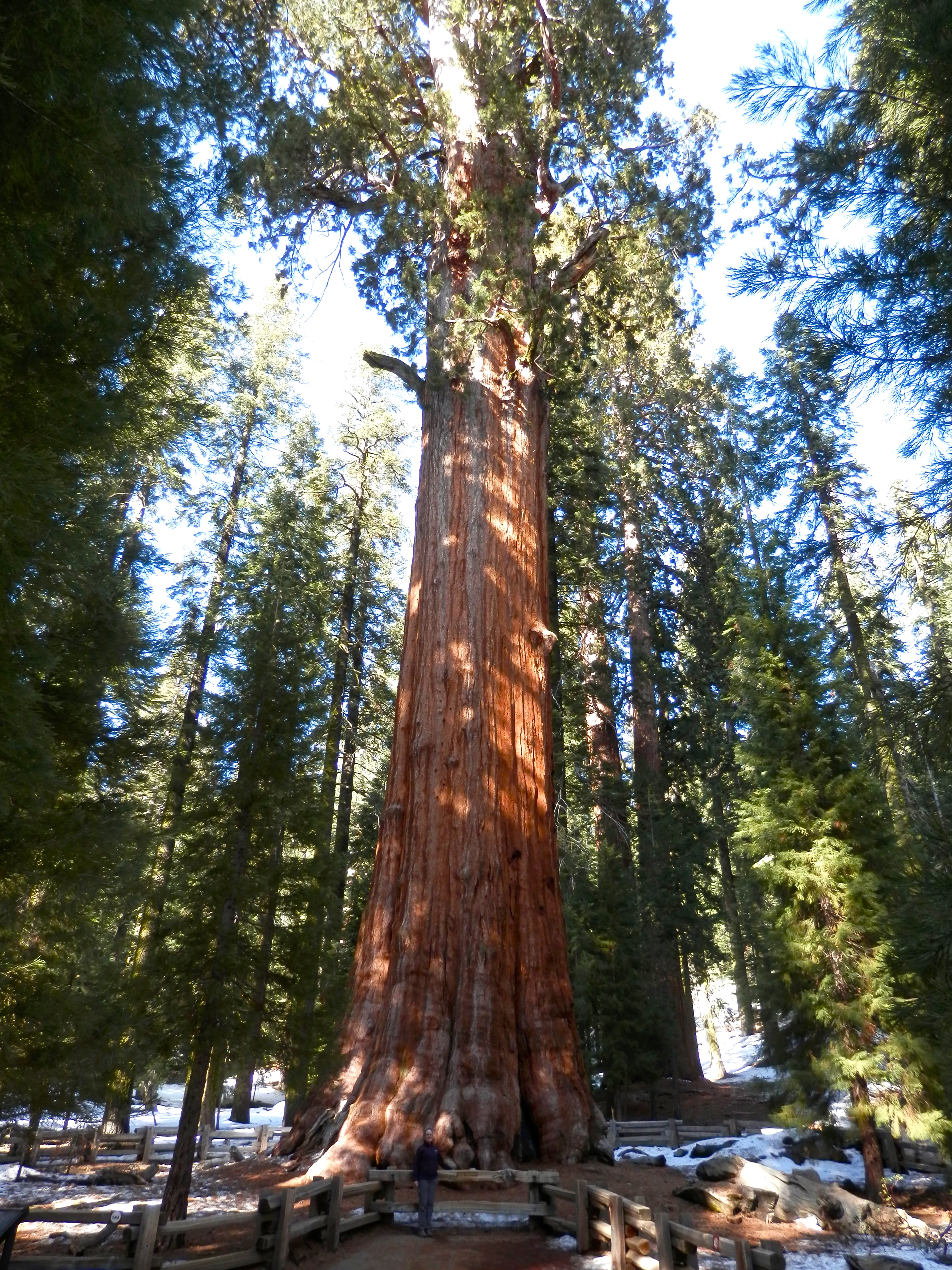
Except for the tree called General Sherman. At 2.7 million pounds, it “the largest living organism on the planet by volume” according to the National Park Service.

Undisputed King of the Forest, The General has a fence around it to protect the tree from people. Some would touch and love the tree. Others may try to take a souvenir piece of bark. Heresy! A hideous act!

You can just about see me in the bottom of the photo

You can just about see me in the bottom of the photo with the General Sherman

Yet, most people would take a piece of the tree without thinking about the implications of thousand – millions – of visitors doing the same thing. The magnificent General Sherman would be no more.

There are many other Sequoias; about 8,000 specimens in the Giant Forest at Sequoia NP. Lots of them are very nearly as big, and as old, as the General Sherman. I felt honored be among living things that have been alive for almost 3,000 years!

We drove through the silent forest first, stopping now and then for a closer look.

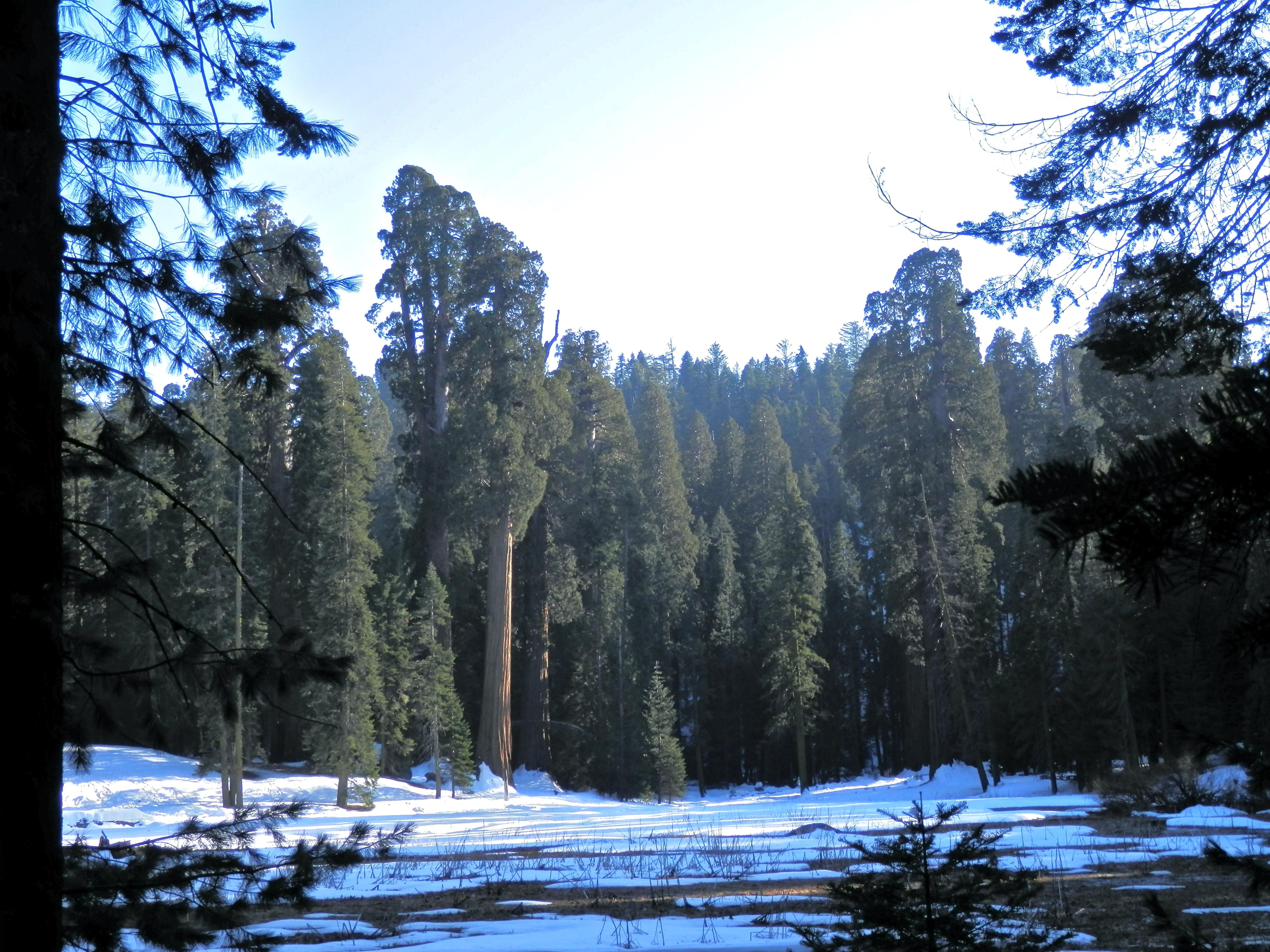
Then, we got out of the car and hiked back into the trees, and saw them standing quietly, regally, in the snow. Each one awesome: a miracle. Looking exactly as they did when John Muir campaigned for their protection in 1875.

OLYMPUS DIGITAL CAMERA

A forest meadow, ringed with Giant Sequoias.

The trees themselves were their own protection. When cut down, early West Coast loggers found that they fell apart, into unusable chunks good only for scrap and pulp. Yay, Sequoias!

The Sequoia has natural protection, in it’s amazing bark, from insects. Fire doesn’t destroy Sequoias, either. Thick bark protects the inner tree and branches are high above the flames. New bark slowly grows over the burned base.

Survivor of many fires and still growing!

Survivor of many fires and still growing! David lends a bit of scale.

Some of these trees show scars from big fires that occur every hundred years or so. At 2,000 years old, that’s a lot of fires!

Here’s me, tree-hugging!

OLYMPUS DIGITAL CAMERA

Tree love!

What a great experience. There are no trees this big on the east coast. Everything back East was logged out at some point during the last three centuries. The trees in Maryland are beautiful but very young. Young, at least, compared to the Giant Sequoias.

– Jane

DAY 169 2/26/2013 Mojave National Preserve

Our driving has been through desert after desert.  Acrid open land with dots.  Bushes, scrub, and Pinyon really, and then tumble weeds when wind or conditions demand.  We’ve seen the dots of Texas,  New Mexico, Arizona and even Colorado.  Now we drive South in search of warmth and to see more desert, yes, and more dots.  If you’ve flown West, you’ve seen them.  Hillsides are dotted, most have no forest, just dots.  Bushes of many size and shape.  The forests are at higher elevations and cling in valleys.  If you’ve driven West you’ve seen the wind-blown tumble weeds trapped in barbed wire.  Trying to reach the other side they gather on the fences.

But seriously the desert is alive.  Very alive!  Even the soils in many of these areas is a beautiful symbiosis of cyanobacteria, fungi, green and brown algae, lichens and mosses.  We saw Cryptogamic soil in a variety of arid settings from Big Bend, Texas to Betatakin, in AZ.  This fragile crust lives and stabilizes the soil itself.  A protection against soil loss to the elements, erosion and wind.  But just stepping on it disrupts this and can takes years to repair.  Lesson; stay on the trail!  Soil really is more valuable than gold.  It supports our food chain.  The dustbowls of midwest attest to the crucial part soils play.  We also see, over and over, where water is life.  Water makes a town.  Water makes tourism.  Water is food.  Communities thrive near water and move when trouble comes or wells dry up.  Lesson; conserve water.  Really.  We can’t believe people water grass back home.  (and even the golf courses or hotel lawns out here!)  Summer grass is meant to be dormant and a bit brown, grow less and allow you more time for Summer fun.  Really.

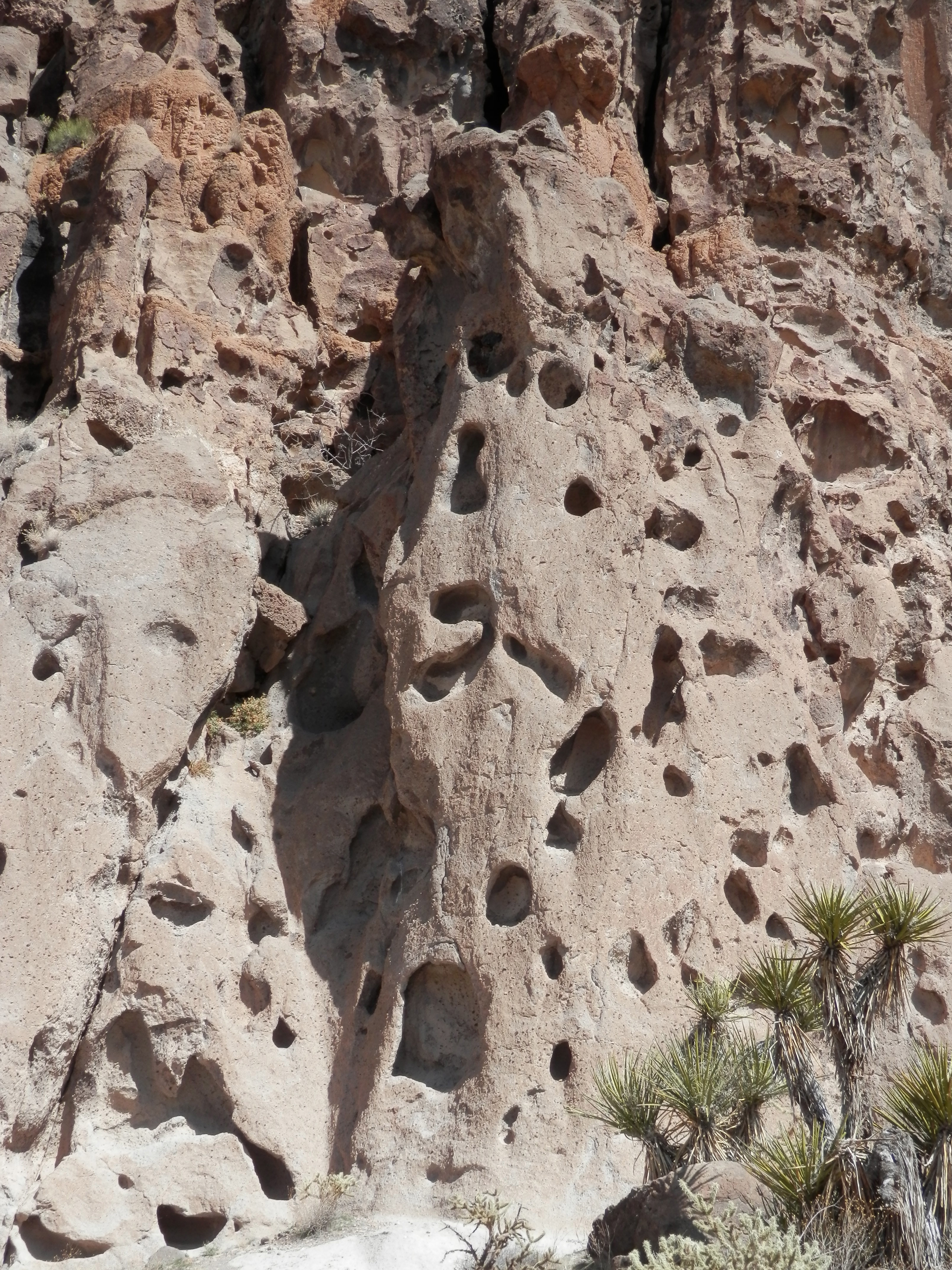
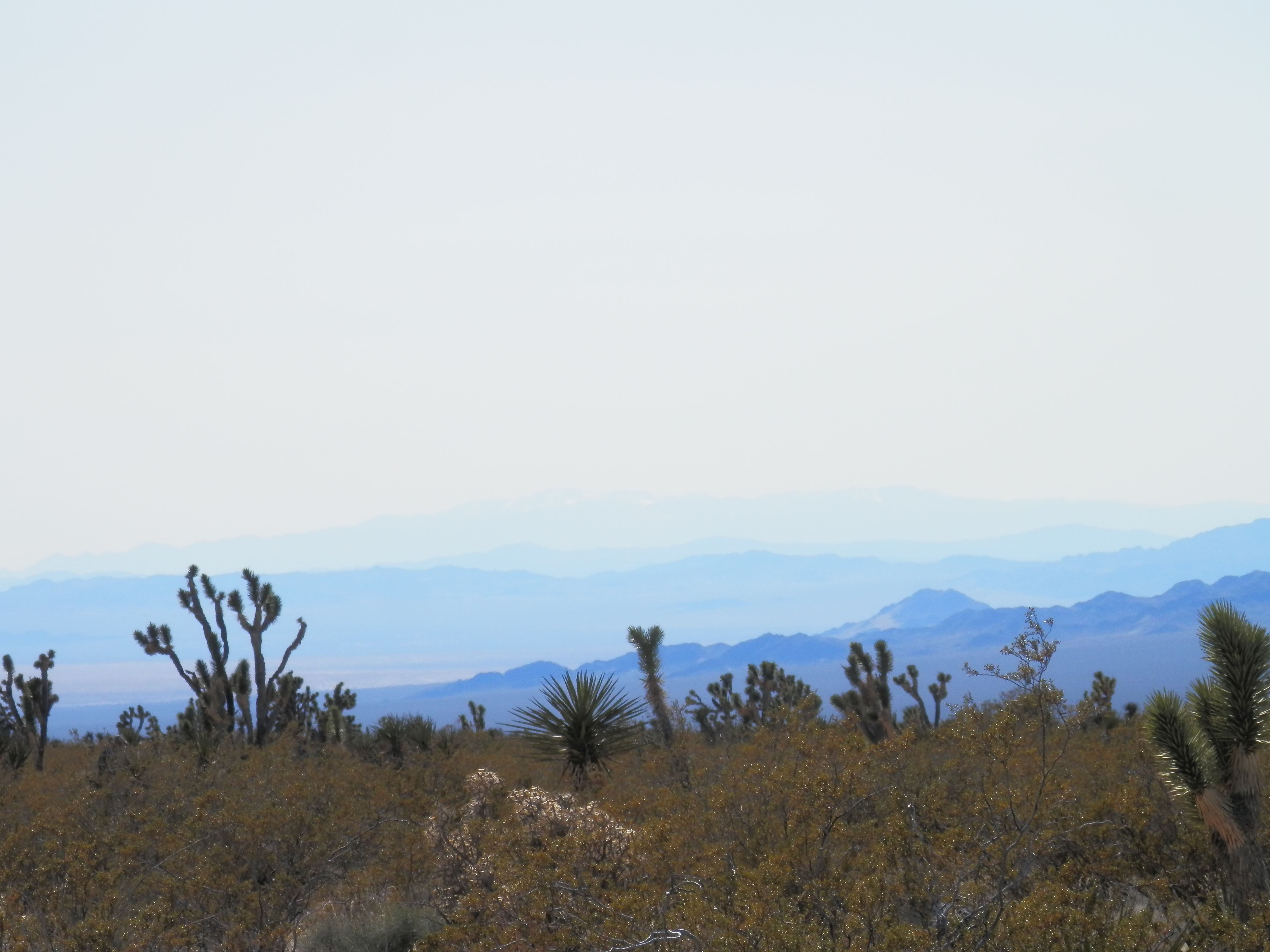
The 1.6 MILLION-ACRE Mojave Preserve varies from about 800 feet elevation near Baker to a spine  of mountains including 7929′ Clark Mountain.  These features create at least 30 identifiable habitats.  Moisture, elevation, wind, soil and sun exposure create such a variety.  Pinyon Woodlands, Joshua Tree Woodlands, Cactus-Yucca Scrub, Desert Dunes, Creosote Bush Scrub and Desert Wash ranging from the higher elevations down create a surprising array.

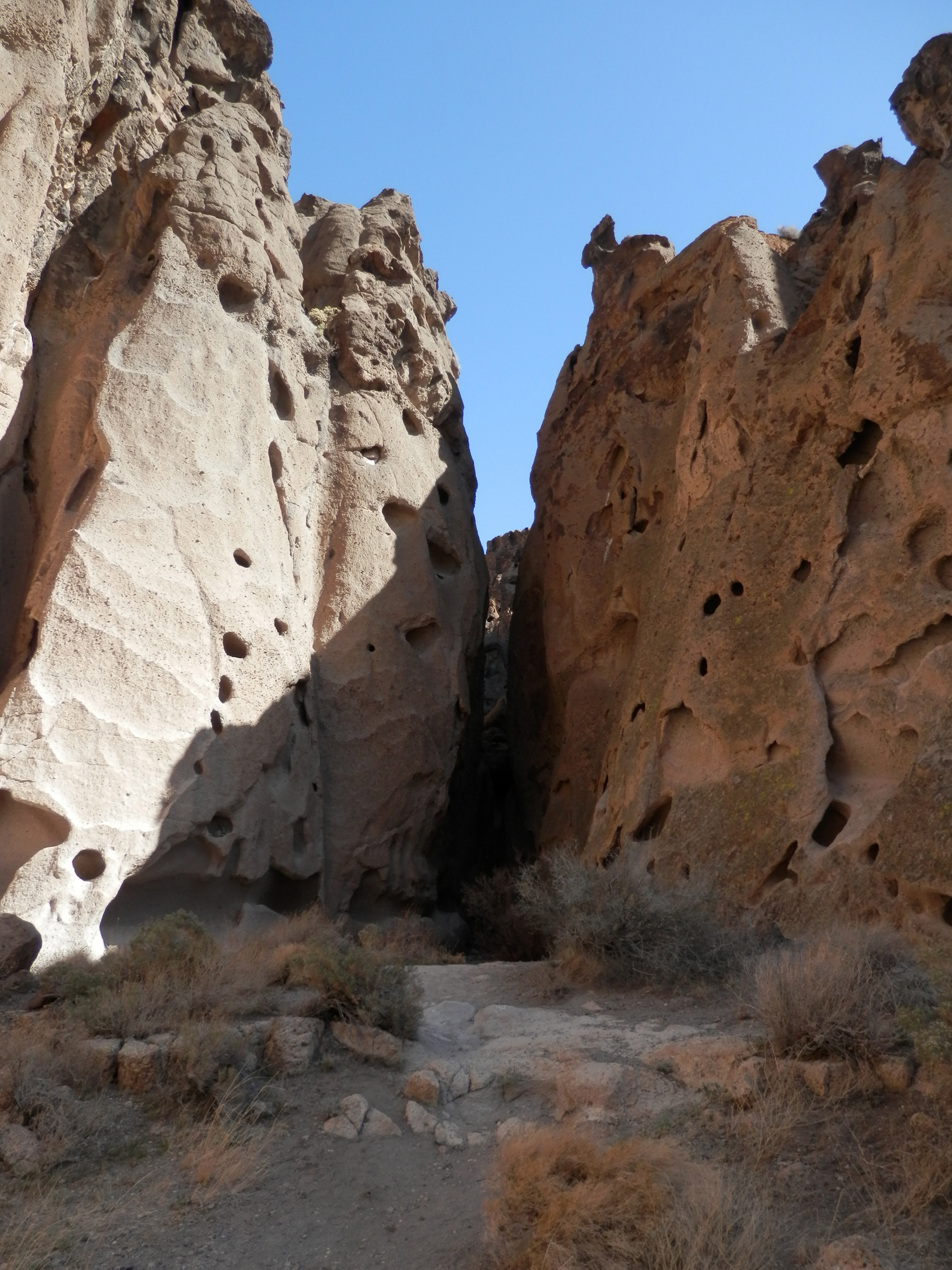
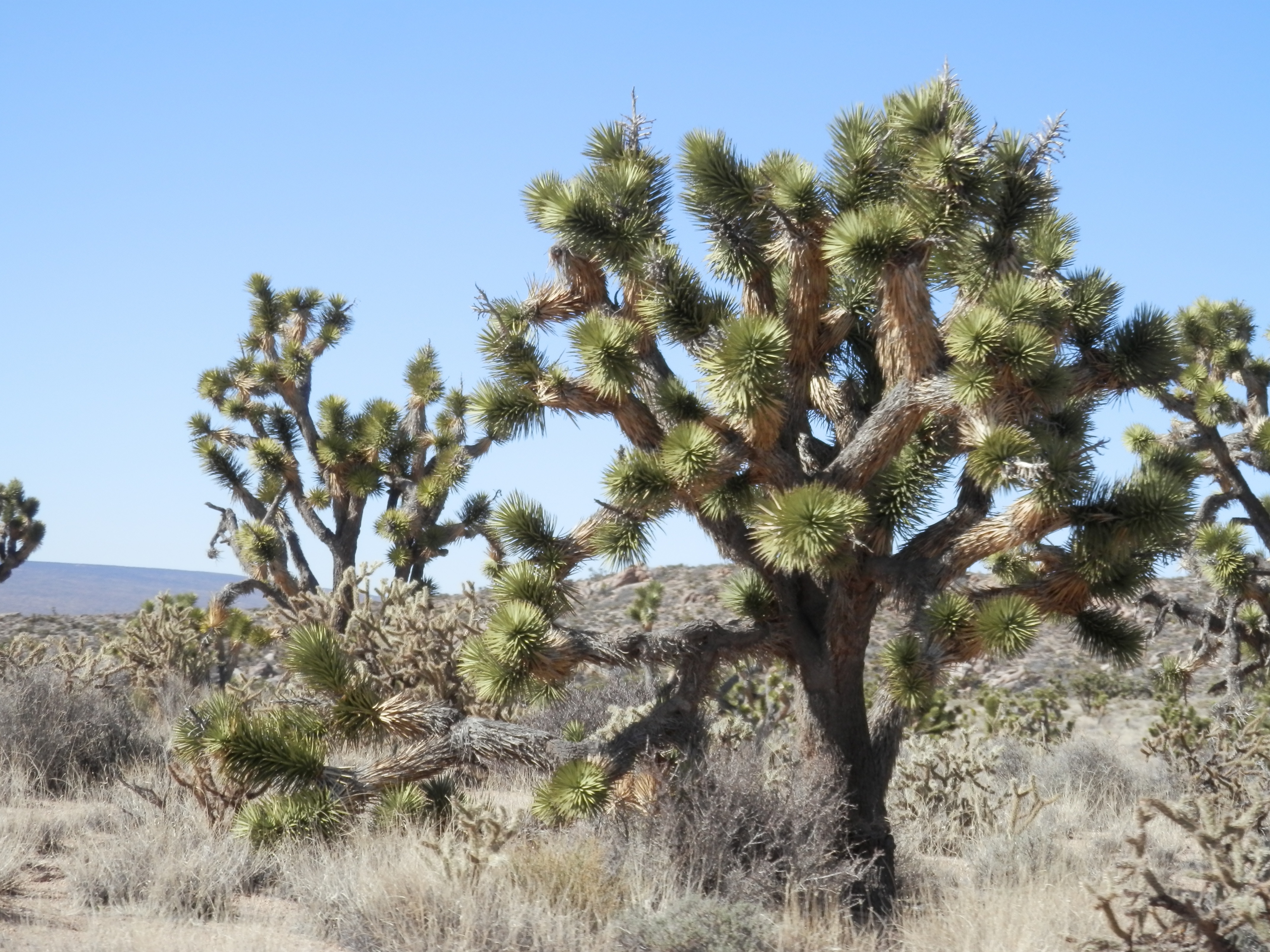
OLYMPUS DIGITAL CAMERA OLYMPUS DIGITAL CAMERA OLYMPUS DIGITAL CAMERA

Staying randomly at Hole-in-the-Wall Campground we were treated to some of this variety.   We especially enjoyed the dirt road we followed leaving the park.  We drove 30 or 40 miles of Mojave Desert dirt road and even saw a bicyclist entering the preserve alone there.  The Western slopes were full of Joshua Trees.  A fellow camper said there are more here than in Joshua Tree National Park.

OLYMPUS DIGITAL CAMERAOLYMPUS DIGITAL CAMERA

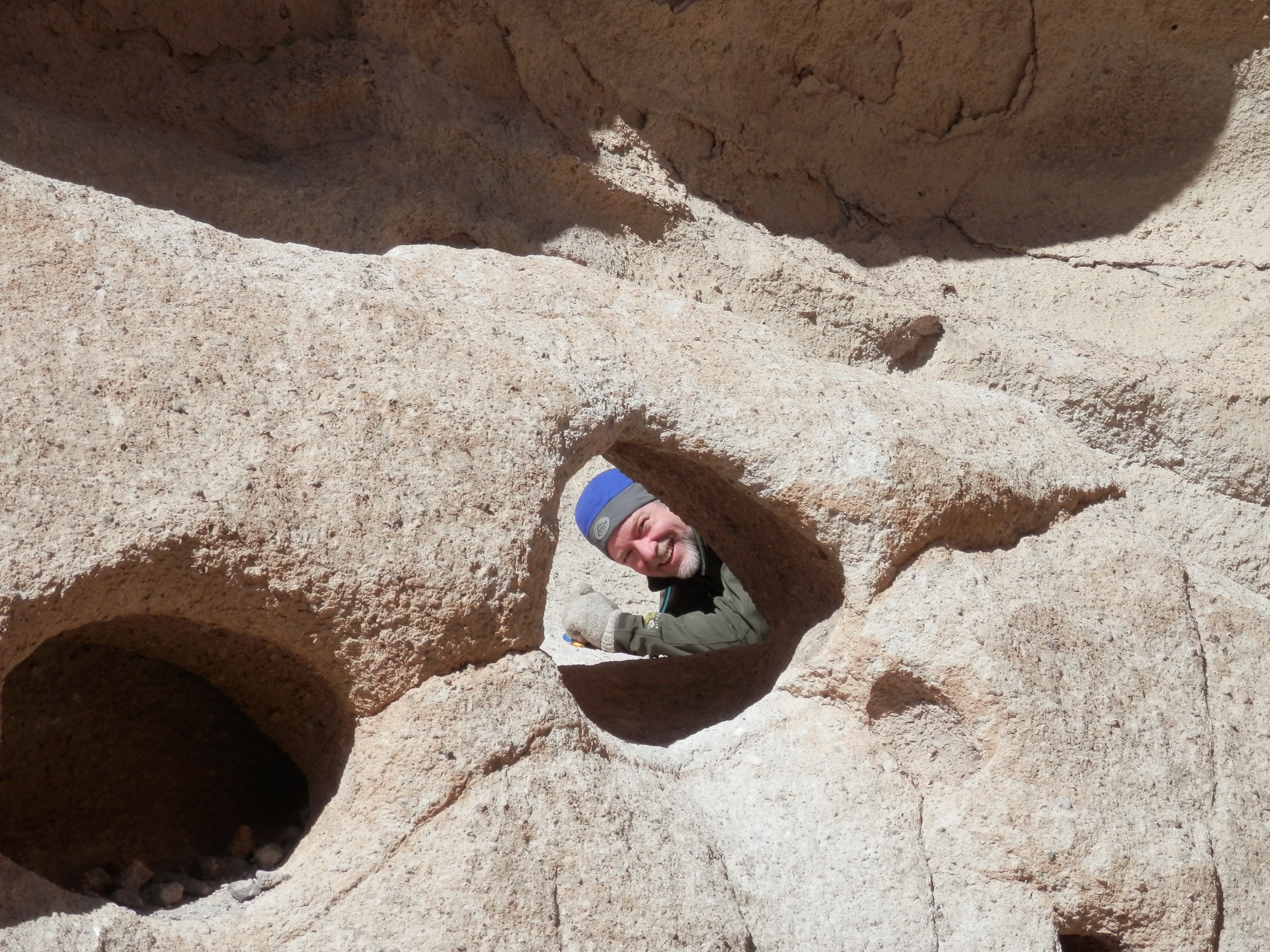
We hiked a cool trail called the Rings Trail which carries you around a smaller mountain or butte, then up through a slot canyon of sorts.

OLYMPUS DIGITAL CAMERA

OLYMPUS DIGITAL CAMERA

There were no warning signs and just subtle NPS trail markers to follow “keeping the butte on your right all the way” as the ranger suggested.

The animal life too, is varied.  Lizards, Mojave Rattlesnake, and the Colorado Sidewinder can be found (but mostly avoided by us).  We saw the big eared Blacktail Jackrabbit, birds, Quail, and raptors, scat from fox or coyote.  The kit fox is the size of a house cat, sure wish we’d seen one.  The Desert Tortoise is a protected species out here.  Brochures and signs suggest checking the shade under your car in Summer.  Even the tortoise seek shade, but need your caution as you prepare to leave.

So yes, there are more than dots in the desert.

-David

DAYS 164 to 168 – Grand Canyon National Park, AZ

02/21/2013 through 02/25/2013

Millions of people from all over the world have visited the Grand Canyon. Billions of words have been written about it’s beauty and awesome-ness. So, we’ll try to limit our words and mostly give you pictures.

Here are some of our reactions to the canyon:

JANE: We arrive at the canyon’s edge as night falls. I’d been told that the Grand Canyon would be amazing, but I really didn’t know it would be beyond words! How to describe standing on the rim? (and you can stand right on the rim; there are few railings here) I’m crying now as I write this, thinking about seeing the canyon for the first time – and every day after. I have to stop and struggle for the right words. It’s beautiful. It’s breathtaking. It’s bigger than you could possibly imagine.  My soul follows where my eyes look and soars over miles and miles of the multicolored, impossible landscape. That such a thing could be, in this world, is awe inspiring. Looking at the Grand Canyon, you get the feeling that anything is reachable. My spirit was transported to the highest pinnacle, the lowest chasm. How could this small, fragile vessel of a human body contain a thing so huge? Wow! I have no other words to describe it.

Take a look at the slideshow. Make it big! Turn it up! These pics needed some music…

In such a place, it’s no surprise that we met some new, great friends. Eva and Robert. They were enjoying something that I have no stomach for: sleeping in the back of a pickup (with a cap) in zero degree weather and snow. And yet, as you’ll see in the photos, they were happy and beautiful! Stronger than me, they are for sure. We shared meals with them and a fantastic hike down into the Canyon with them. They were a joy! We hope to see them again somewhere, sometime.

The Grand Canyon belongs to all Americans. You should go and see it – soon!

DAVID:  One of my favorite things was watching families and couples take pictures of each other.  It looked trite at first, then I saw the beauty.  The beauty of sharing that first reaction that keeps hitting you for days and every time you turn around.  The light, ledges, shadows and sheer heights all grab you over and over.  Its hard to walk away.

I am a speck.  A speck in space and time.  The canyon is SO big, vast, as a barrier you must travel hundreds of miles in either direction to get around it.  You can’t see it all without turning or tipping your head.   Neither breadth, nor height.  It is not a spectacle, just to be stared at; you can walk in.  You can walk WAY in.  For hours you can walk down.  Then for more hours, you can walk back up and out.  Switchback trails go down for hours into millions of years of geology lessons and multiple climates and wildlife zones.  You HAVE to VISIT yourself!

Here’e the slide show:

– Jane & David

DAY 163 2/20/2013 A Navajo Welcome

Marfa the 4Runner had seemed to recover without event from the Transmission “Overheat” in Red Pass, Colorado.  We skied and travelled another hundred miles with no sign of that pesky red light.  Then, on a 45 degree day crossing level  desert West of 4 Corners, CO, without any big hills; there goes that light again!  Dang!  If its going “ON” now, we’ll never be able to travel in a “hot climate”.   Stop again.  Check fluid level again.  Bend the front license plate up to allow more air.  Let it cool and drive some more.

OLYMPUS DIGITAL CAMERA

Automatic transmissions are NOT my favorite.  In fact, all of our family vehicles are “standard” 5 speeds.  One reason is that an automatic provides a black box of invisible problems that often can only be mysteriously and expensively solved.  As teens, my friends derisively called automatics, “slush boxes or washing machines”.  It is just this trait that causes problems.  By nature, there is slippage.  Slippage generates heat.  Clutches are a direct hookup.  Poor Marfa, she came off the assembly line with a 4 speed automatic and often can’t decide which gear to be in.

We drove about 30 careful miles to Kayenta, a small dot on the Arizona map deep within the huge Navajo Reservation.  She didn’t trip the light, but we just can’t be crossing hundreds of empty desert miles with our fingers crossed.  Again we saw signs for “just what we needed as we slowed into town”.  NAPA auto parts, gas stations and hotels greeted our tense bodies.

Jane and I have affinities toward the Native American cultures as well as deep concerns for their present state.  (I detest the word Reservation, and wonder what their overall feel for that is sometimes…) We posed with heads hung low for a picture back at The Museum of the Cherokee Indian in North Carolina.  (link) We beamed when we saw the message in that town: UNITY!  Yet with mild trepidation we parked and opened the darkly tinted and steel barred doors at the dusty NAPA in Kayenta.  A big friendly cat sat calmly on the counter.  Surely a good sign.
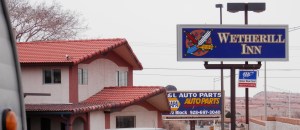
Another safe haven

Another safe haven

Sam, the manager and I discussed the possibility that the transmission filter may be clogged and leading to poor flow.  Marfa’s fluid has been changed twice.  Once at home and the other time errantly blasting everywhere in Alabama (link).  Then too we had car parts stores and safe level ground available for repairs; “where is my super-suit”?  By phone later, Lynn too, concurred that the filter needed to be checked and changed.

Agreeing that the simplest, cheapest solutions are worth a trial, I ordered a filter and pan gasket.  Unfortunately, it would be THURSDAY before they arrived.  As is often our path, Jane and I simultaneously came to the same decision and looked to getting a hotel for the night.  OUR FIRST NIGHT IN A HOTEL IN 162 days!

"I'll wait right here; and won't eat much"

“I’ll wait right here; and won’t eat much”

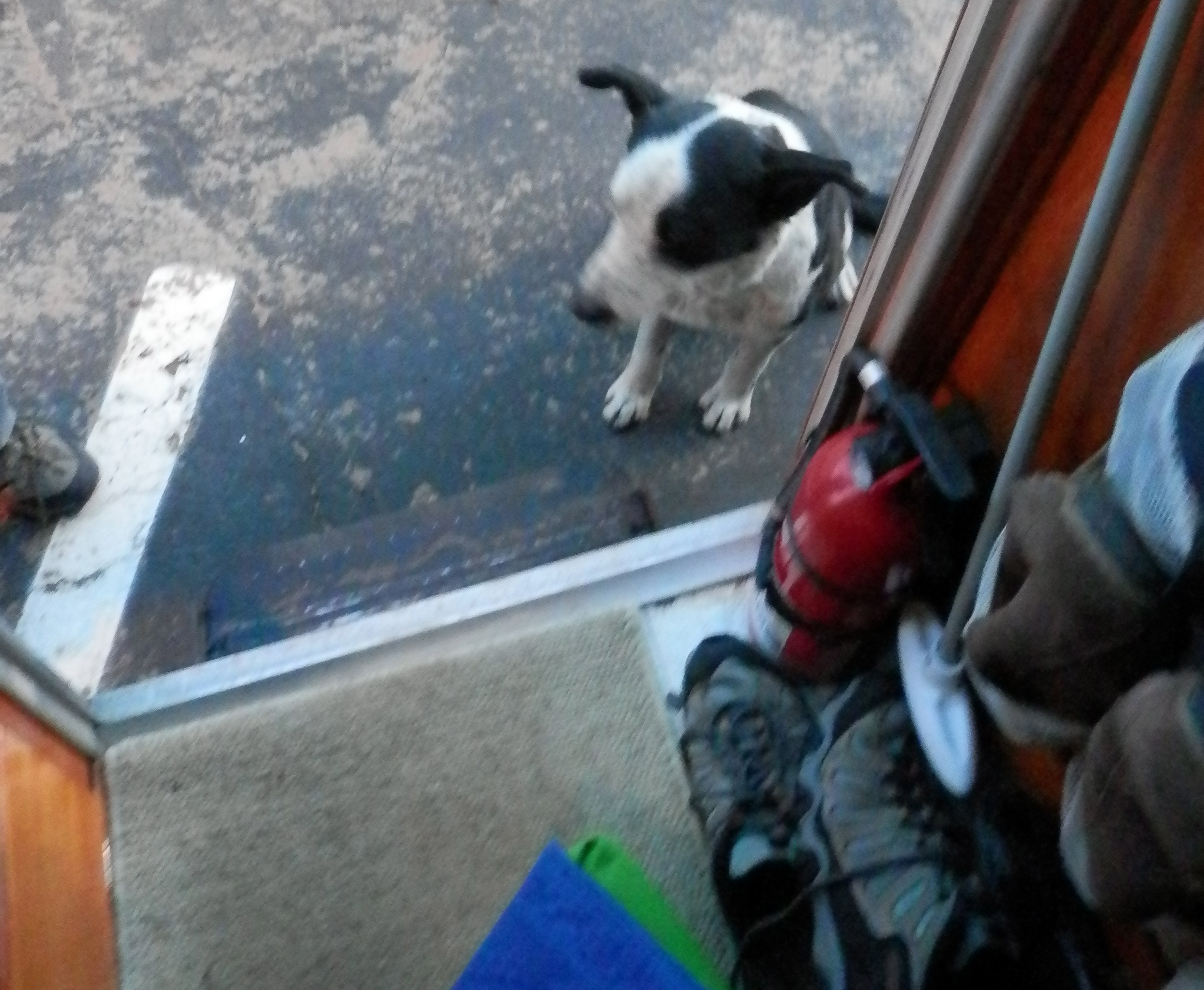
The Wetherill Inn had a very nice stray, greeter dog wandering its lot. Also a good sign for us.  He seemed to enjoy our carefully measured treats as we moved a few belongings in for a good night sleep in a King Sized bed.  Funny, who needs all that space?

I also decided that paying a shop to do the drain and change was better than spilling red transmission fluid anywhere out here.  Sam suggested seeing Edward up at the crossroads where we came in.  The shop is part of an Alon gas station and showed years of red-brown dirt from completed jobs all over the floor and shelves.  It may not seem culturally sensitive to mention that everyone we’ve been meeting has beautiful shiny black hair and the proud features of the Navajo.  They have also been universally friendly.

After making an service appointment we walked over to the Blue Coffee Pot.  Jane and I always look for small, local businesses so the “Cash Only” sign didn’t bother us a bit.  We sat, self-consciously at a table in the sun.  Smiles beget smiles.  We looked around, not wanting to betray our slight discomfort nor the love for the people around us.  A family waited patiently for their food beside us and gently asked if we were traveling and where to.  Husband, wife and son all asked about pieces of our trip.  Laughing about relatives who’ve travelled to some of our destinations.  OLYMPUS DIGITAL CAMERADonald senior gave us his phone number and asked that we call if we needed ANYTHING.  “Its really rugged out here.”  As we explained our path, Donnie the son, smiled warmly saying “We all have to work together”.  (UNITY again…)
Note the preponderance of pickup trucks with feed

Note the preponderance of pickup trucks with feed

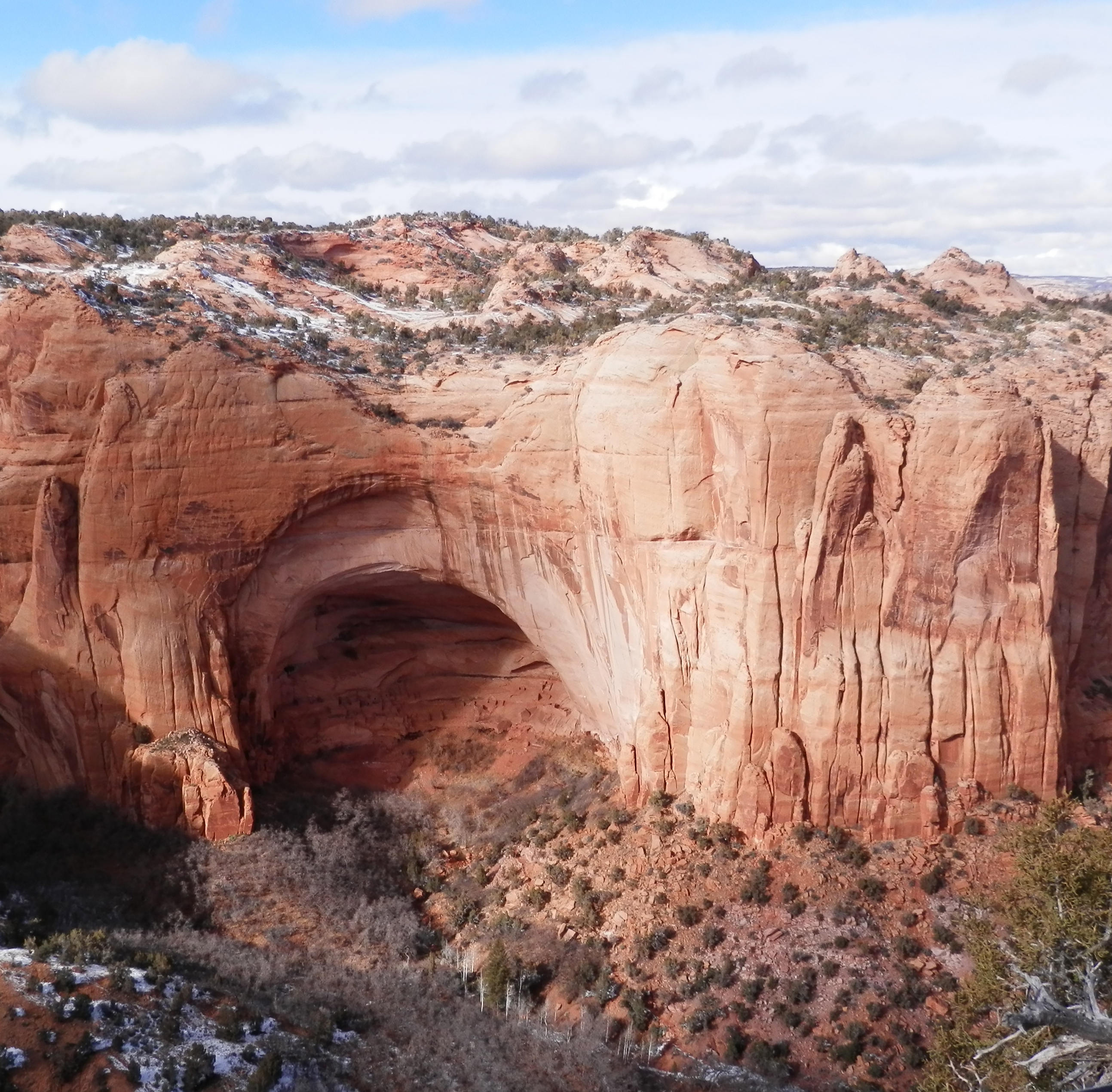
Later we went to Navajo National Monument, parked in a delightful free campground and hiked to view Betatakin, yet another Ancestral Puebloan ruin.  A great sunset accompanied our cold little cookout while we grilled elk burgers bought way back in Salida.  Another calm and cozy Tramper night while musing how great the privilege to sleep within the Navajo Reservation.   The Navajo rugs and silver in the gift shop beguiled us more.  We had NO Hesitation leaving the Tramper alone in the campground while we took Marfa to town for service.

That arch is 452 ft tall and deep within lies Betatakin Pueblo, residence of about 100-120 people

That arch is 452 ft tall and deep within lies Betatakin Pueblo, residence of about 100-120 people

As seen from above, across the canyon.  In Summer, you can tour with guides

As seen from above, across the canyon. In Summer, you can tour with guides

Again we feasted on delicious Navajo breads and tortillas for a lunch at the Blue Coffeepot.  Today’s social bridge was a 4 year-old angel named Summer.  She was pulling the hood from her “Peace sign print” winter coat playfully over her face.  Her grandparents too, couldn’t have been nicer or more full of smiling warmth.  Delores and John insisted we take their phone number in case we needed it.  Delores came over to the table and spelled the name of her town: Chilchinbito, about 30 miles away.  Suggesting we stop in if we need them for anything graced us once again.

Jane and I quietly glanced at each other, lumps in throats, squelching our tears of joy, knowing grace and thanks.  Seeing no evidence of malice in races that have known the history of the Trail of Tears and the worst of settlers and pioneer  treatment is the fulfillment of that Cherokee sentiment.  UNITY.  We could all learn from that one.  Ghandi, Martin Luther King, Cherokee, and Navajo, all peaceful responses.  Love!

-David
DAY 162 – 02/19/2013 – Mesa Verde, CO

A long time ago, I was talking with a patient who was telling me about her extensive travels around the U.S. I asked “What was the most wonderful place you have visited?”. She said, without hesitation, “Mesa Verde!”. It was the most beautiful place she’d ever been.

So when our random travels took us near, we stopped to take a look.

OLYMPUS DIGITAL CAMERA

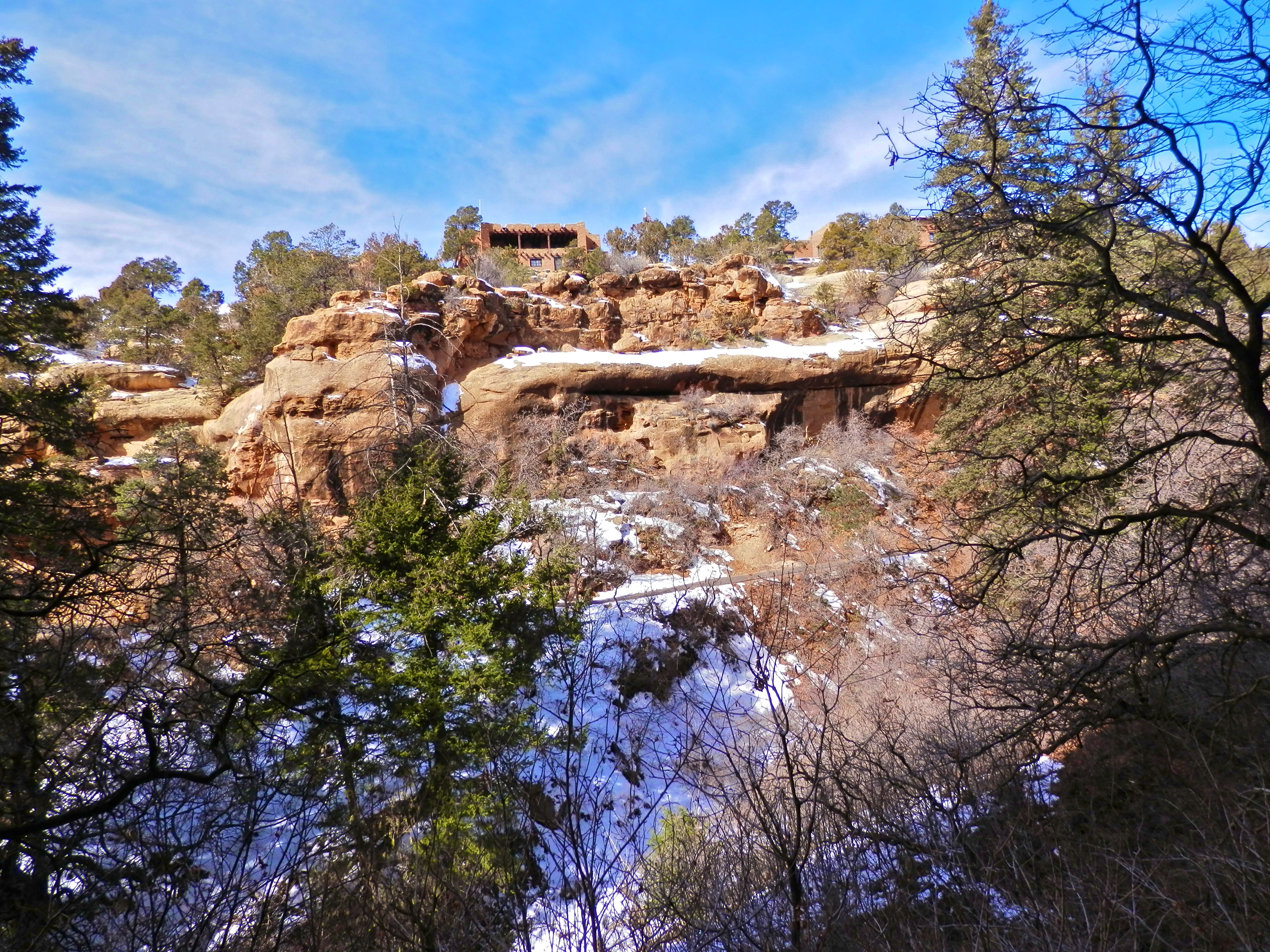
We toured Spruce Tree House ruins. One of 4,000 sites of archaeological significance in the park.

And Mesa Verde is beautiful! I probably would not go so far as to say it’s the most beautiful place we’ve seen. But it’s certainly way up there!

It’s interesting that the very best thing about Mesa Verde was – our Park Ranger guide! Ranger Sean Duffy of Rochester, NY was not only chock full of deep knowledge about the park, he gave us a really great performance of his informative tour. It’s as if he’d trained as an actor. He really animated what might have been a dry (no pun intended, it’s very dry out West!) talk. It was fun and funny and by the end, we wanted more!

OLYMPUS DIGITAL CAMERA

Sean Duffy gives us some background and insight.

Here’s something that Sean taught us, in his own inimitable way: Do you remember hearing about the mysterious Anasazi people? The ones who inhabited the cliff dwellings at Mesa Verde and then disappeared forever into history? There was much speculation about who they were and where they went. Was it climate change? Disease? They vacated these beautiful villages long before Europeans arrived with their guns and germs and Manifest Destiny.

OLYMPUS DIGITAL CAMERA

Spruce Tree House ruins are in the bottom of this canyon. At the top is the ranger station where our tour began.

Now, however, anthropologists believe that, for whatever reason, they just moved elsewhere. That the Anasazi, now called Ancestral Puebloan, are the distant relatives of the Ute, Hopi, Acoma and Navajo people. Now these tribes live in the surrounding area; in Arizona, Utah and other Western states.

OLYMPUS DIGITAL CAMERA

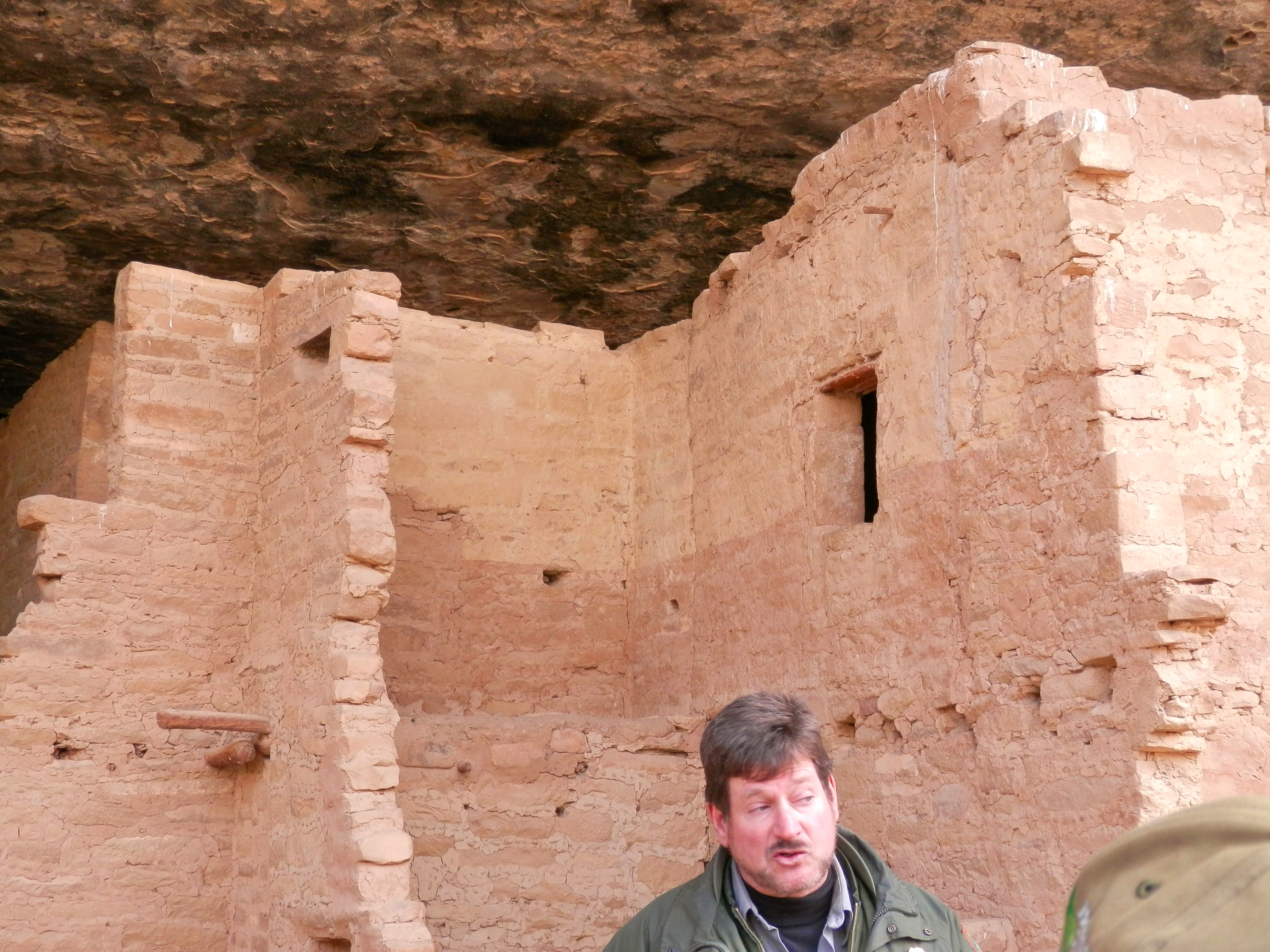
Sean expounds at the ruins. Behind him you can see the remnants of yellow and red paint on the dwelling walls.

Sean was able to answer questions on any subject. Park history, natural history, geologic formations, botanical questions about trees and plants. He was quite the font of knowledge.

Mesa Verde National Park included lots of landscape around the ruins. This beautiful mesa is sacred to the native people of the Southwest.

OLYMPUS DIGITAL CAMERA

The beautiful Visitor Center, with the sacred Mesa Verde in view.

The gorgeous, brand new (it opened 7 weeks before we visited) Visitor Center was built to be as environmentally friendly as possible and highly respectful of the places Native Americans hold as precious.

OLYMPUS DIGITAL CAMERA

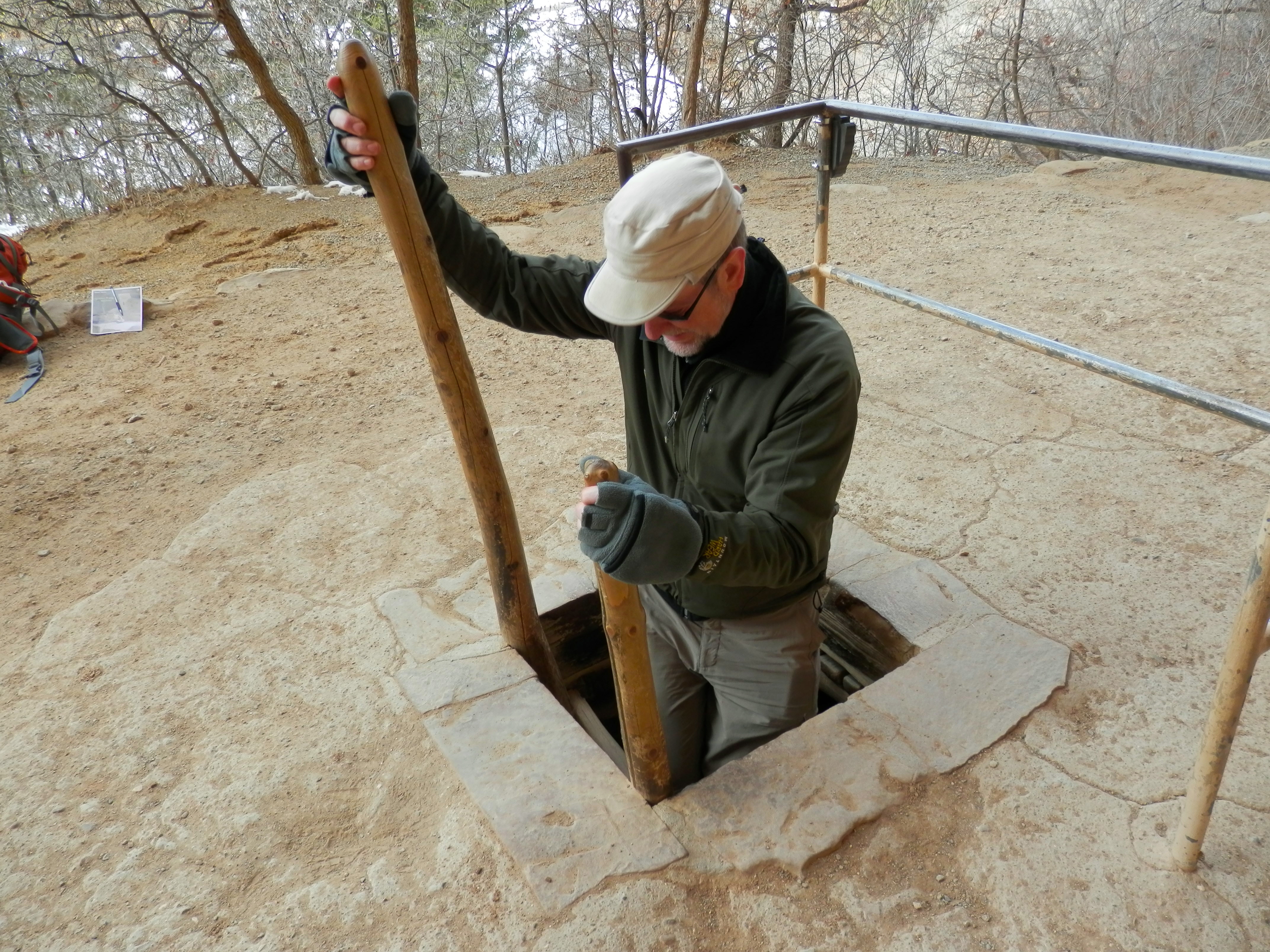
We climbed down into a kiva, a room with a fire hole and a sipapu, a portal where spirits rise from one world to the next.

Mesa Verde manifests, for the visiting Easterner, compelling echoes of the past while presenting the spirituality of one of the most gorgeous places in the American West. Does that sound a little like a National Parks brochure? Maybe, but it’s all vividly true!

OLYMPUS DIGITAL CAMERA

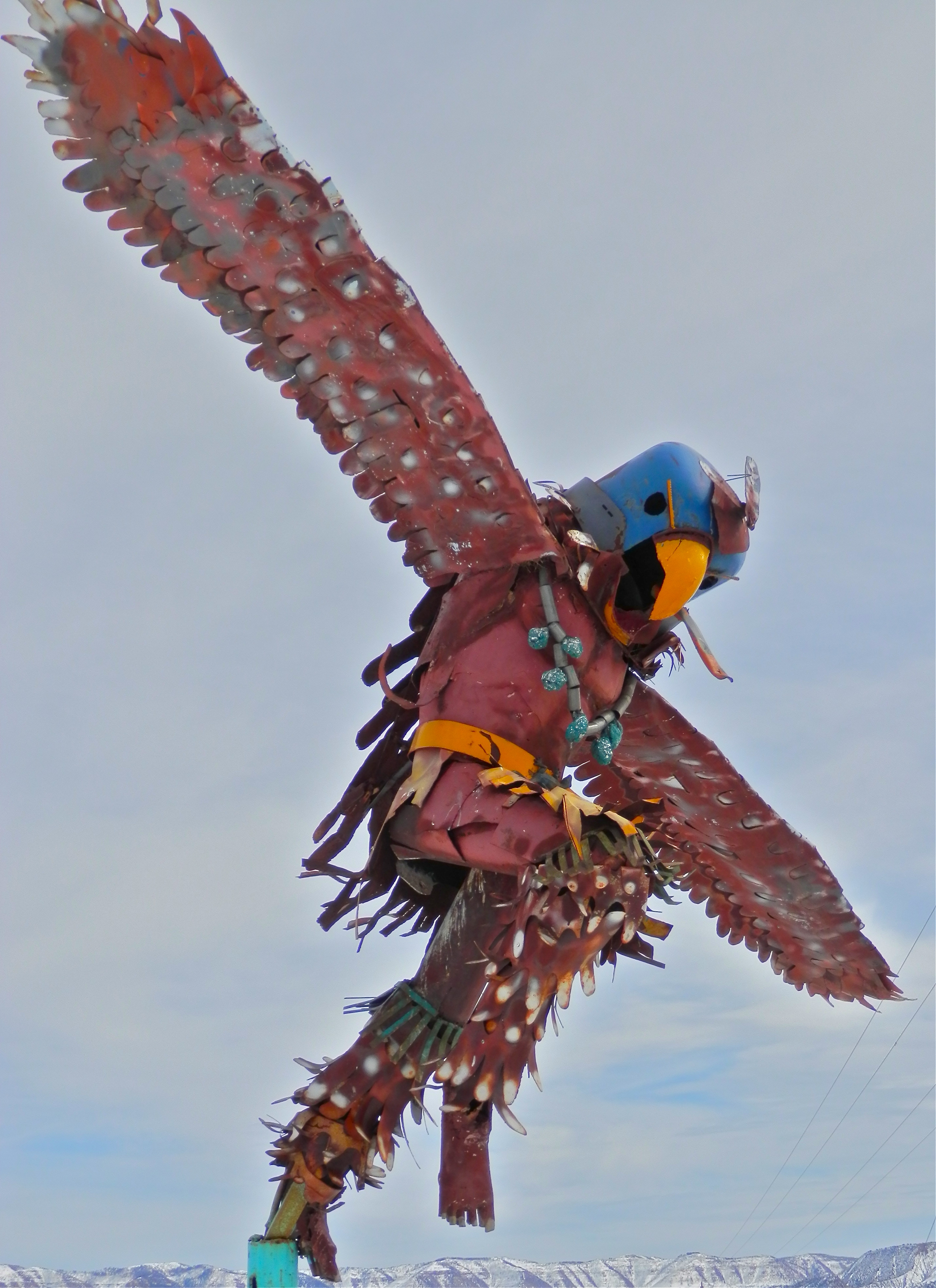
A modern metal sculpture in the desert near Mesa Verde.

– Jane