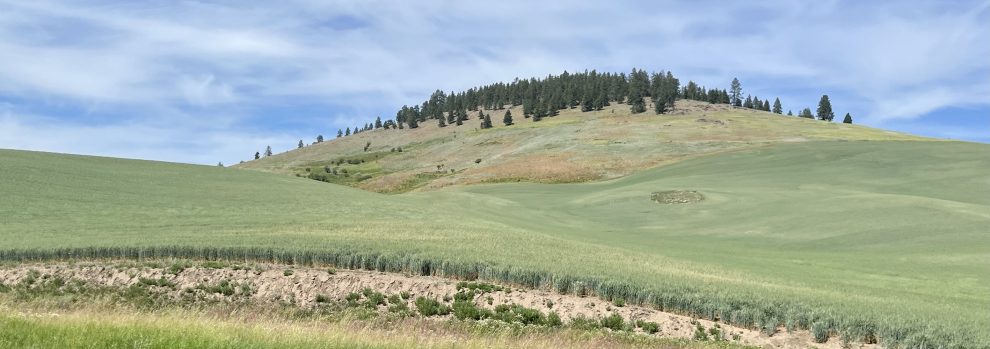
This post was going to be pictures only, no words. Then I realized I am actually going through some complex processes and thoughts I’d like to share. Don’t worry, they’ll still be pictures. The challenge lies in all my prior knowledge, learning and innate beliefs being cast upon the reality of the woods around me.
I’ve always loved the woods; peace was found, trouble was hidden. Walking, riding, just standing and looking/listening/smelling. This trip sent us places we’ve never been and added not only to my joy, but to my understanding. The woods in Davis, WV were decimated by man for coal, timber and even bombing runs. The regrowth there is hard to fathom and so I mostly just ride there and enjoy the shade. Taking it in, but for granted.
Truly no expert on any of this, I’m sharing my own overwhelming introduction as it rolls from state to state. This road is changing and adding to my viewpoint. I knew from movies and pictures that the West and Pacific Northwest would be a spectacle and an experience. We’ve been in Alpine and Sub-alpine forests. I’d heard a tiny bit about Coastal Rain Forests but the name Pacific Temperate rainforest is the more correct term. These areas get almost 10 feet of rain annually and have mostly moderate temps from 50-75 degrees F year round. Lots of growing time and lots of competition for sunlight. The Alpine areas I love to ski in get snow and somehow survive the wild swings of harsh Winters.
We have truly embraced them all throughout, but the PNW trees have shaken me to more attention. They have rescued us from the heat and unrelenting sun of the plains. We were surprised to be seeing a 101 degrees reading on the dash after leaving Three Rivers, Idaho. We had been in a forest that was cool and crisp, loved adding a jacket and hat to cook breakfast. Suddenly, a few miles later we were shocked driving up the highway and hiding in the shade just pumping gas, placing foil in every window for only a few minutes shopping in a market.
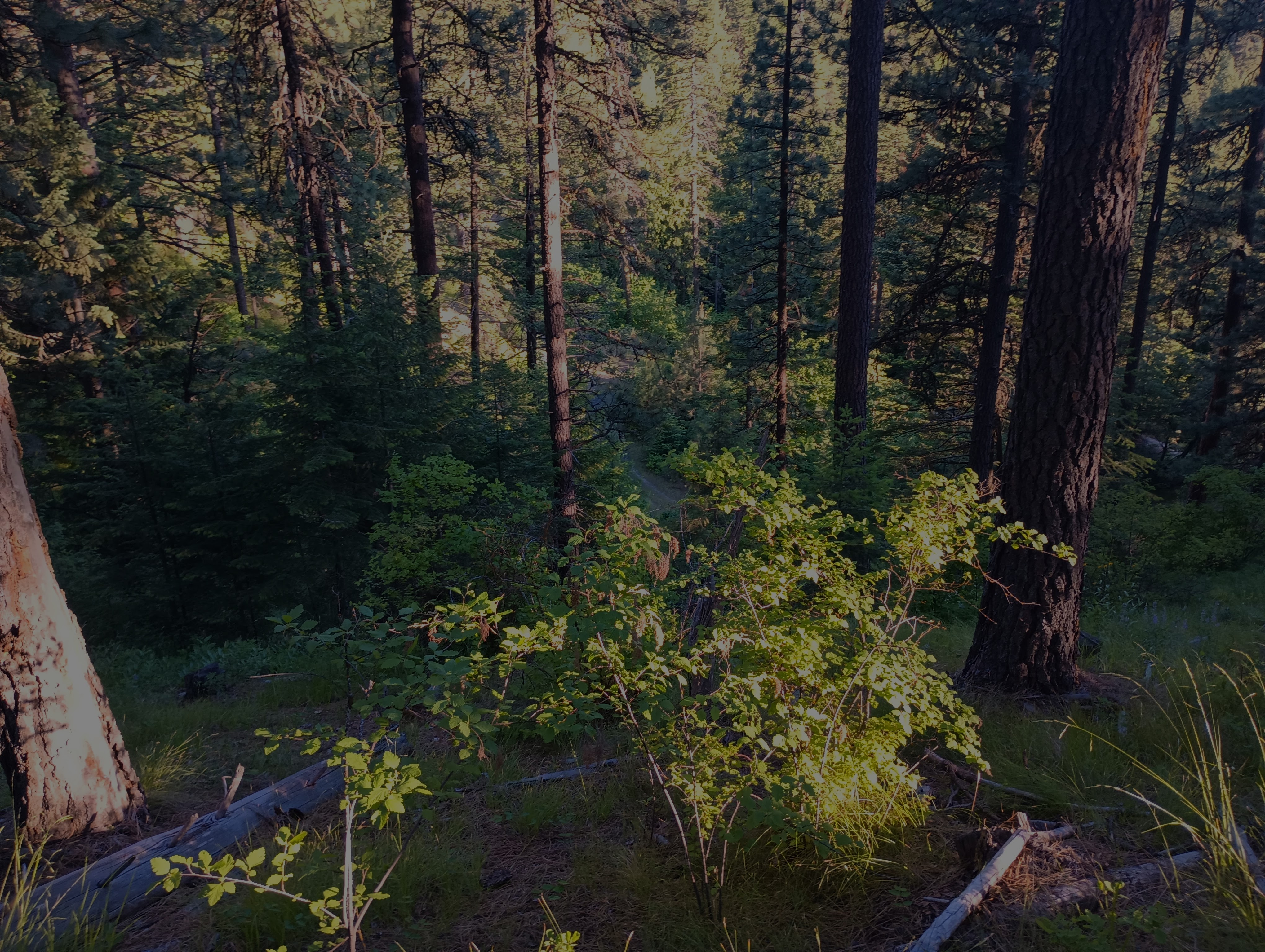
Perhaps the first reprieve was on Moscow Mountain, Idaho with Lodgepole Pines, Douglas Fir and Western Red Cedar. The woods there welcomed us in and delighted with the green smells and breezes. Though we saw the beautiful areas, lush hollows and tight shady places in the rides, there were timbered places and widened dirt roads (like where we saw the moose and calf). Other than those roads, the timbered areas were not so obvious. But as we drove through the town of Troy, Idaho we were overwhelmed by the unmistakable smell of cedar and witnessed a sawmill working through the night. Quite a busy sawmill with acres and acres of cut timber lined up and readied for processing.
I reminisced about the nice forests in Montana near Red Lodge. There we also witnessed thousands of acres that had burned. We heard of fires in 2020 and other years, noting bare places of carnage and seeing new growth beginning to recover. We found burnt pinecones in places spurred by the fires to send out life. We saw so many bare acres we seethed when we saw kids at the next campsite playing with a fire in their dad’s brief absence. We nearly grabbed the host when luckily the dad came back and tempered the kids by stopping their games with leaves and pine needles.
Then driving further West into Washington, we were again assaulted by the hot sun on the plains. So much so that we took refuge in a Quality Inn. Air conditioning, water refill, a shower and charge-ups of all electronics were needed along with the almost 9 straight hours of sleep.
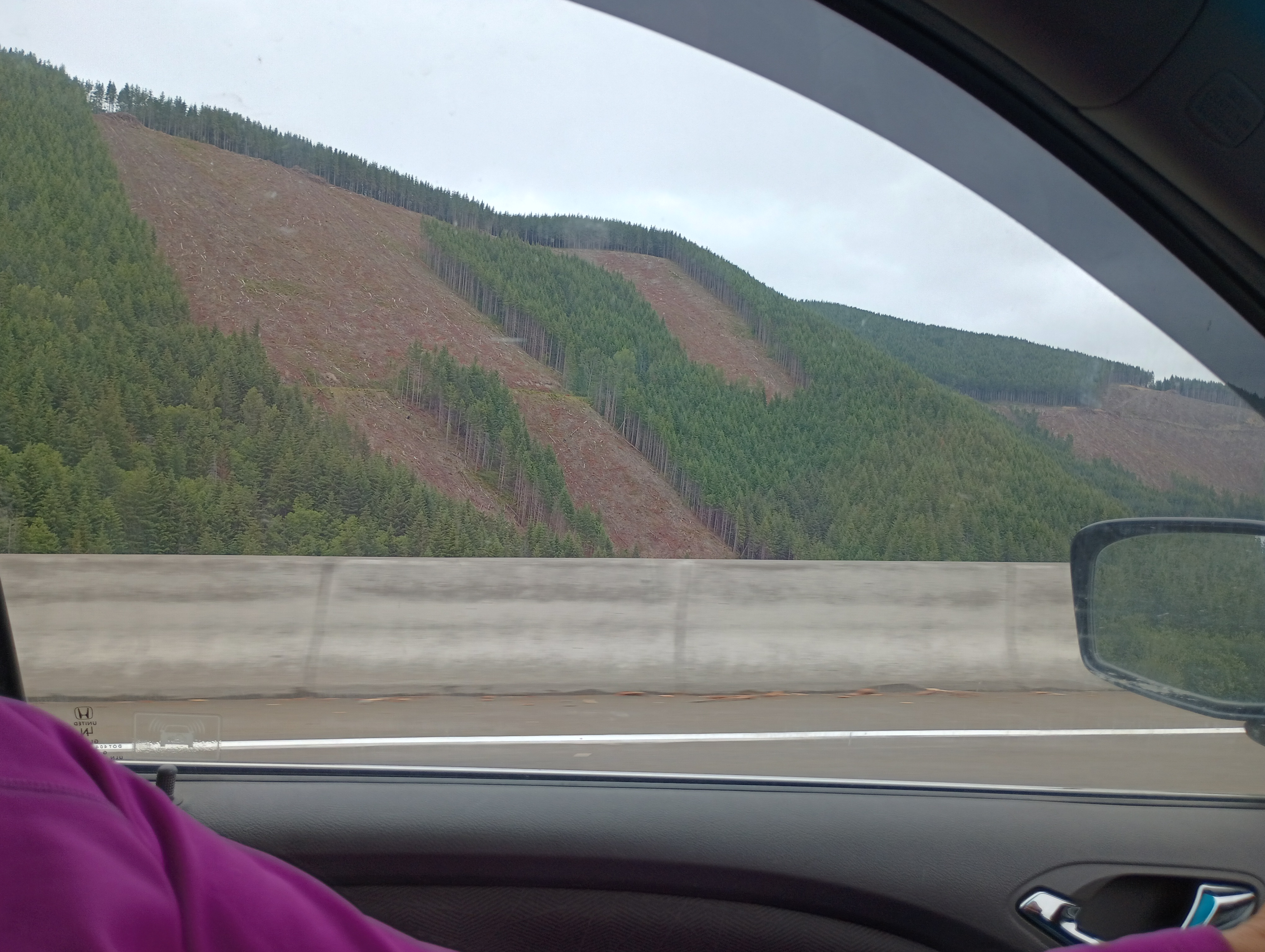
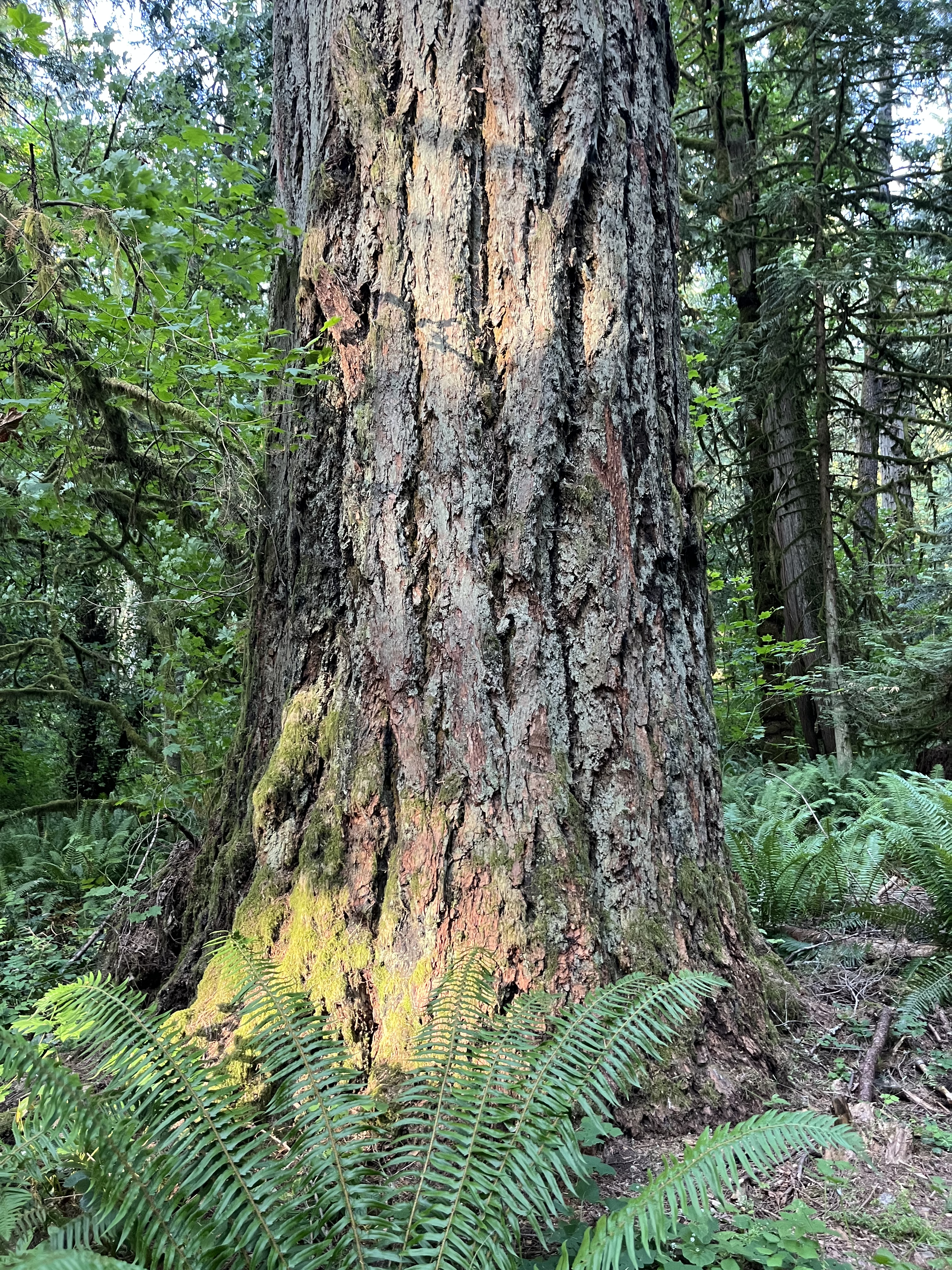
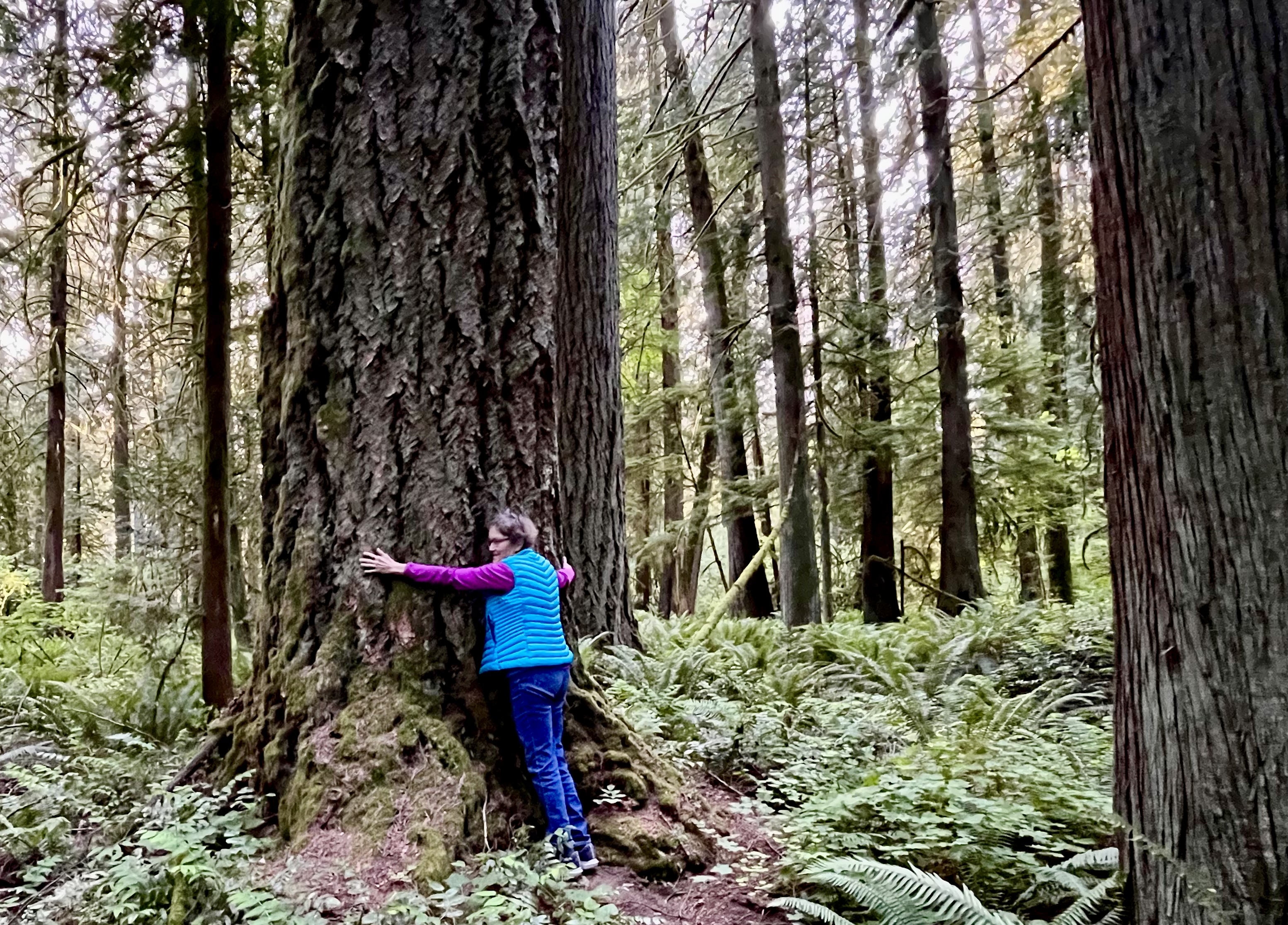
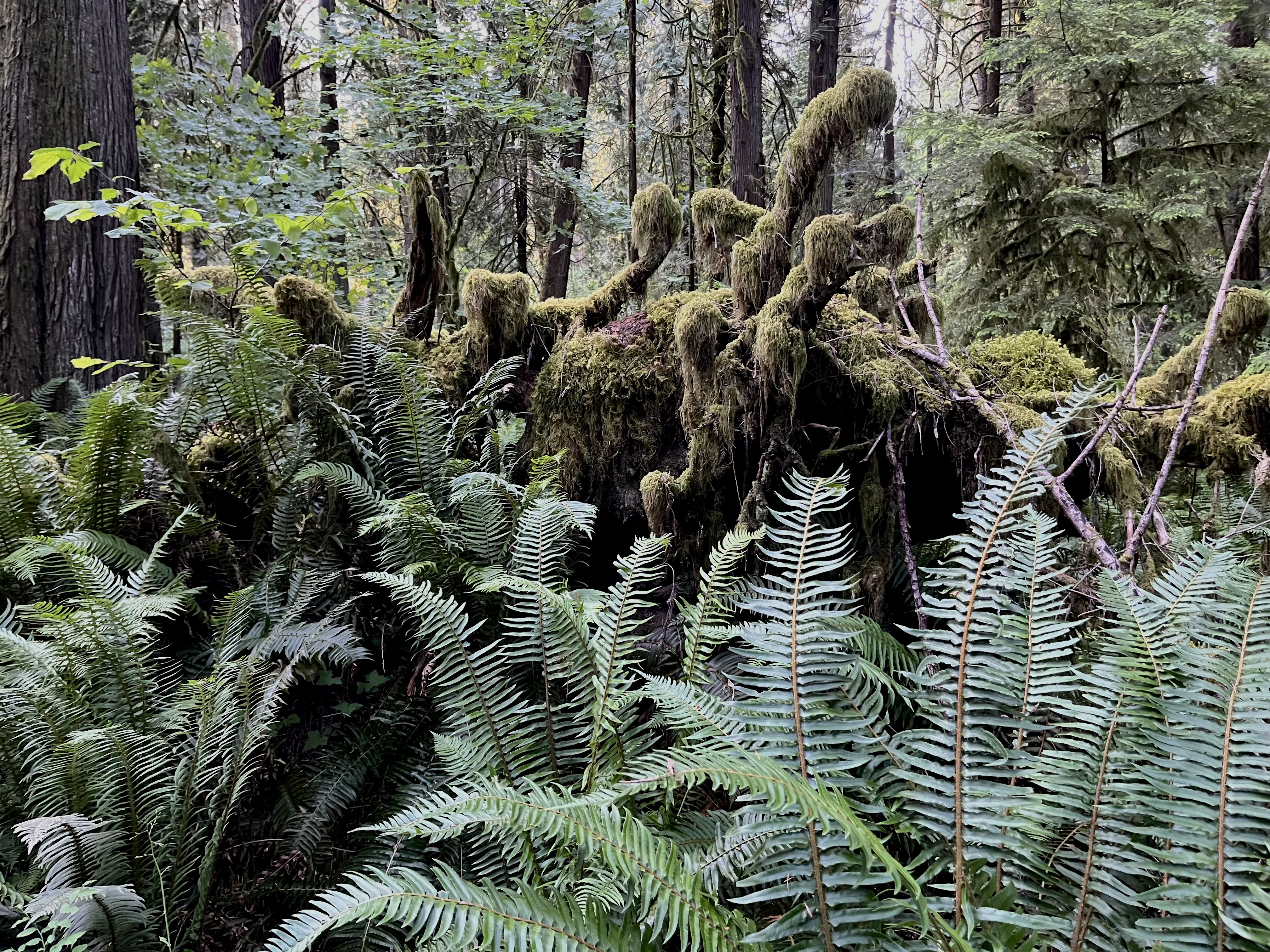
The next turns included traffic jams in Seattle, then to Dash State Park South of Tacoma. Another great forest! Still brewing my reactions we went to perhaps the “oldest growth” yet in Lewis and Clark State Park. The first day trip from there took us to Mt St Helens. During the drive we saw bare hills, roughly stripped of every tree, other mountains stripes of tall trees between bare patches. Whole mountainsides denuded of all trees as well as varied areas replanted and labeled with the year planted. But the 616 acres were an amazing refuge in Lewis and Clark State Park, so much we stayed two days. The green, ghostly snags and even living trees were massive co-working organisms to gawk at. They got me looking, thinking and writing all this stuff.
Suffice to say, between natural fires, large and small, Cataclysmic volcanic events and logging we’ve seen trees challenged, blasted, scorched and removed. Filling our knowledge gap came from an unexpected source. We went the road less-travelled and entered Mt St Helens National Volcanic Monument bypassing the National Park Entrance and visitor center.
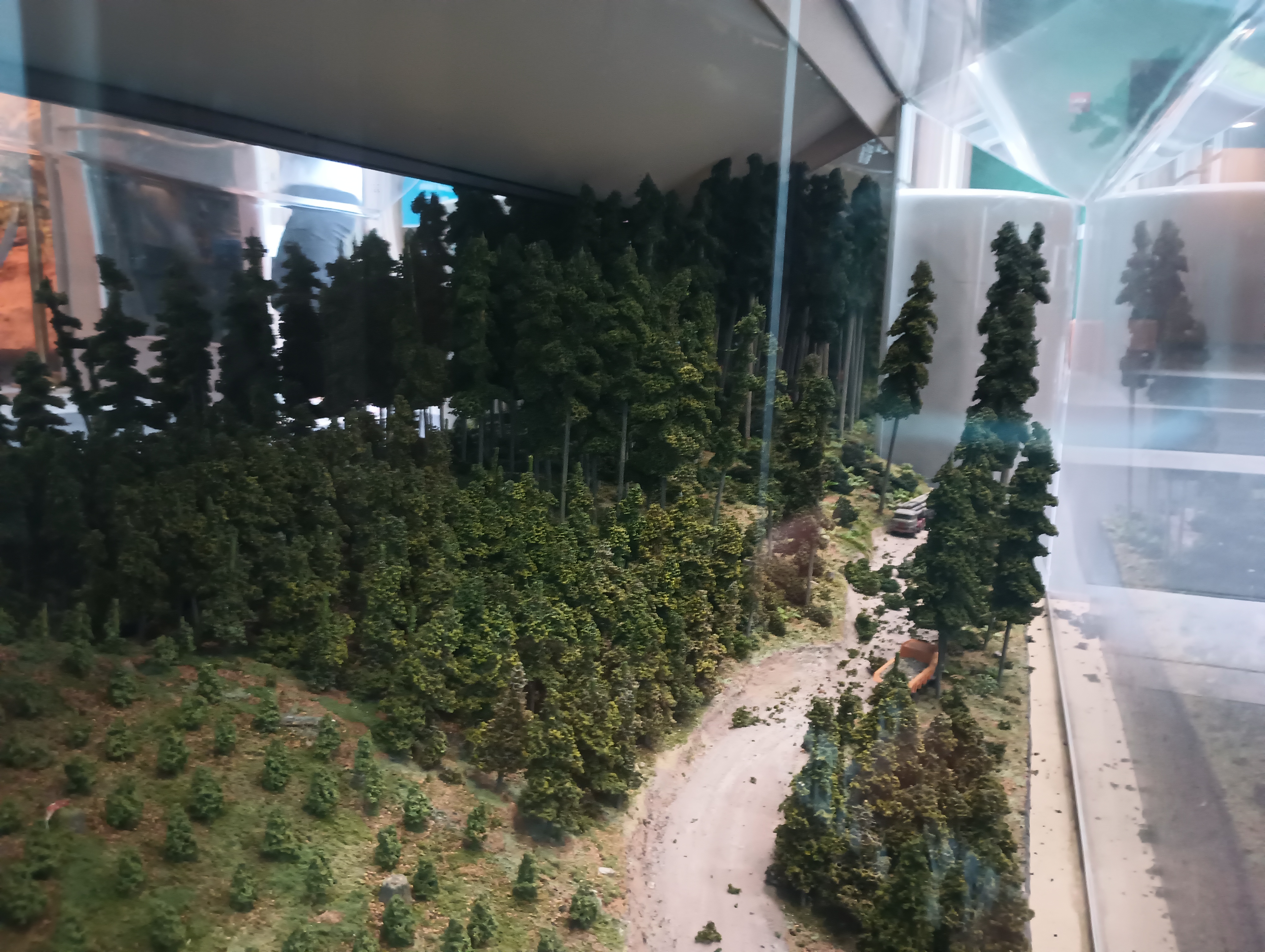
This led us into a Weyerhaeuser “Forest Visitor Center”. We braced ourselves for logging propaganda but got much more. The cataclysmic events of the eruption took out 1500′ of mountain May 18, 1980 was a natural event that decimated 130,000 of acres of trees. The river was completely changed and raised ~180′ by a 5.1 earthquake and the largest recorded landslide ever with boulders, piles, silt and massive glacier melt flooding. The mountains all around had trees leveled like toothpicks. Nearly 68,000 acres was being managed by Weyerhaeuser before the blast, so they were integral to the plans for recovery and replanting. (Of course they harvested every bit of lumber they could over the two year period)
Inside the blast zone nature was allowed to take its course. Jane and I hiked the “Hummocks” area in which nature alone was allowed to shape the recovery. The Hummocks are hills formed by debris, with pots of sinkholes from melting glaciers as well. The trail wound its way upward and around some areas where old growth trunks were still visible, protected from the blast but dead all the same and clinging to where they had stood.
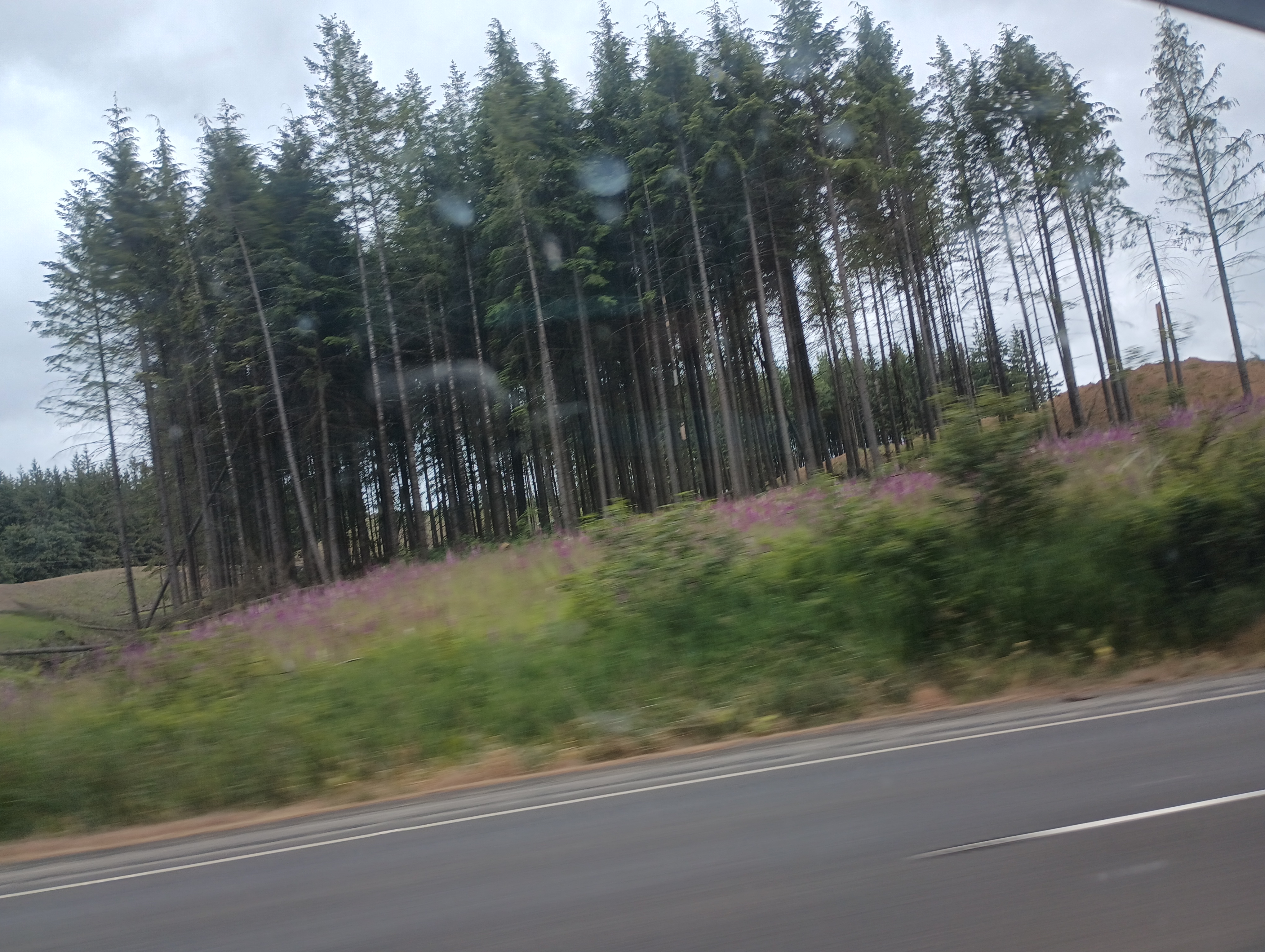
Outside the blast area and on their own properties, the timber companies prepped and planted on a massive scale. The natural areas have deciduous bushes, trees and early conifers but are far far behind the planted regrowth in the timbered areas. These had multiple layers and plots of trees of varied heights depending on when they were planted. The mature ones started in 1982 look “almost” like a natural forest. But, they had a sameness, a lack of variability that betrayed their nature. They were a near mono-culture. They looked “too perfect”. So now I’ve seen layers and layers of nurtured forests. Often they lay 50′ from the road, hidden by a thin veil of uncut trees or bushes only seen over big hills or turns. The secret bare places or trees planted 4, 5, 10 or 15 years ago hiding in plain sight. Enjoy the pics, sorry it took so long to share.
The trees individually and as forests thrive, grow, change and return any way they can. Of course we’ve all seen the sidewalks cracking from incessant return of roots and time. I don’t have much of a conclusion or summary, but I see the expedient return by the logging companies for profit. I see the slower more random way nature takes over, but most of all, “I see the trees in the forest”.








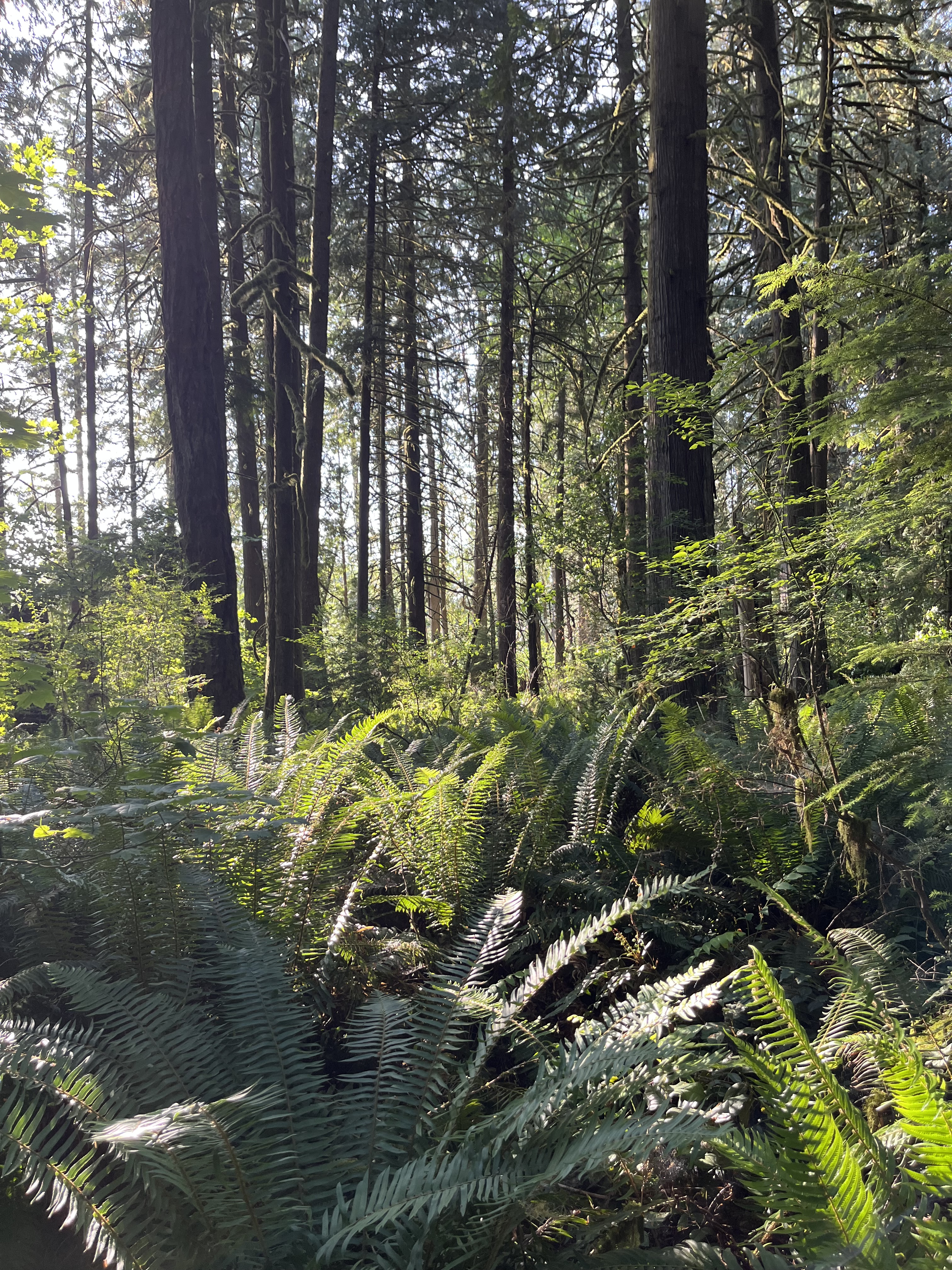

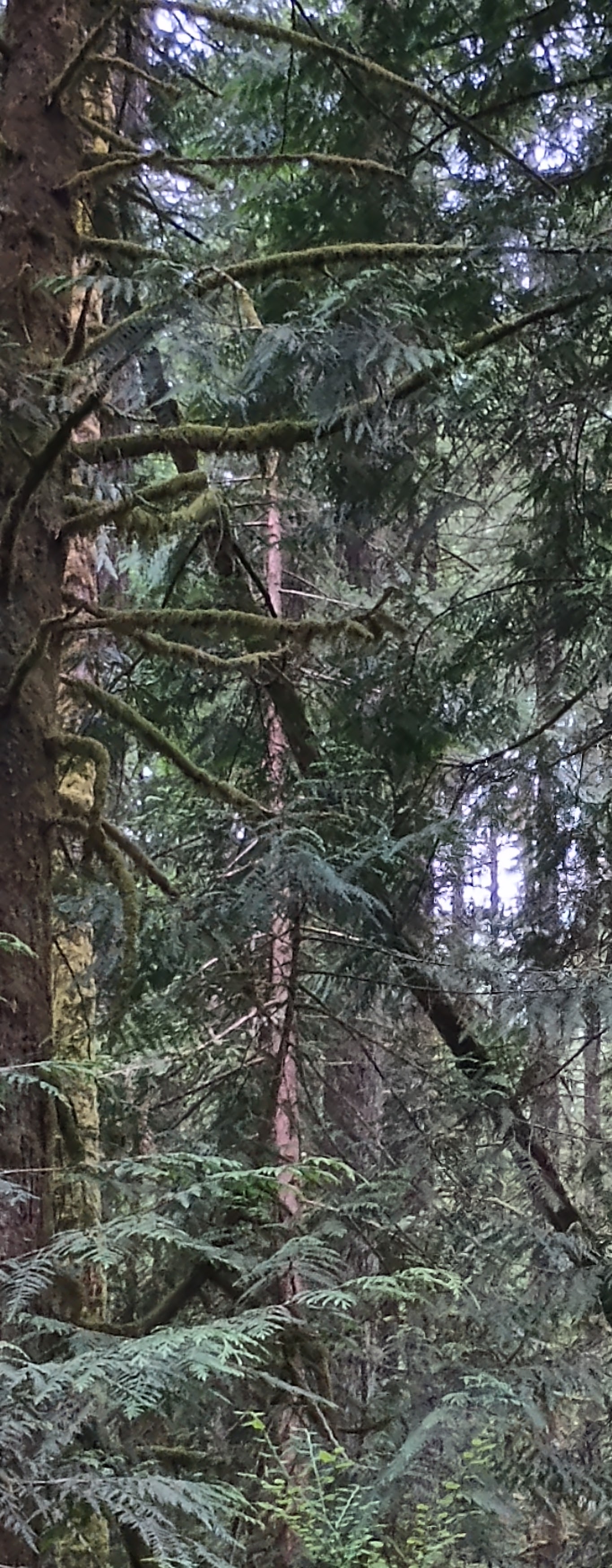
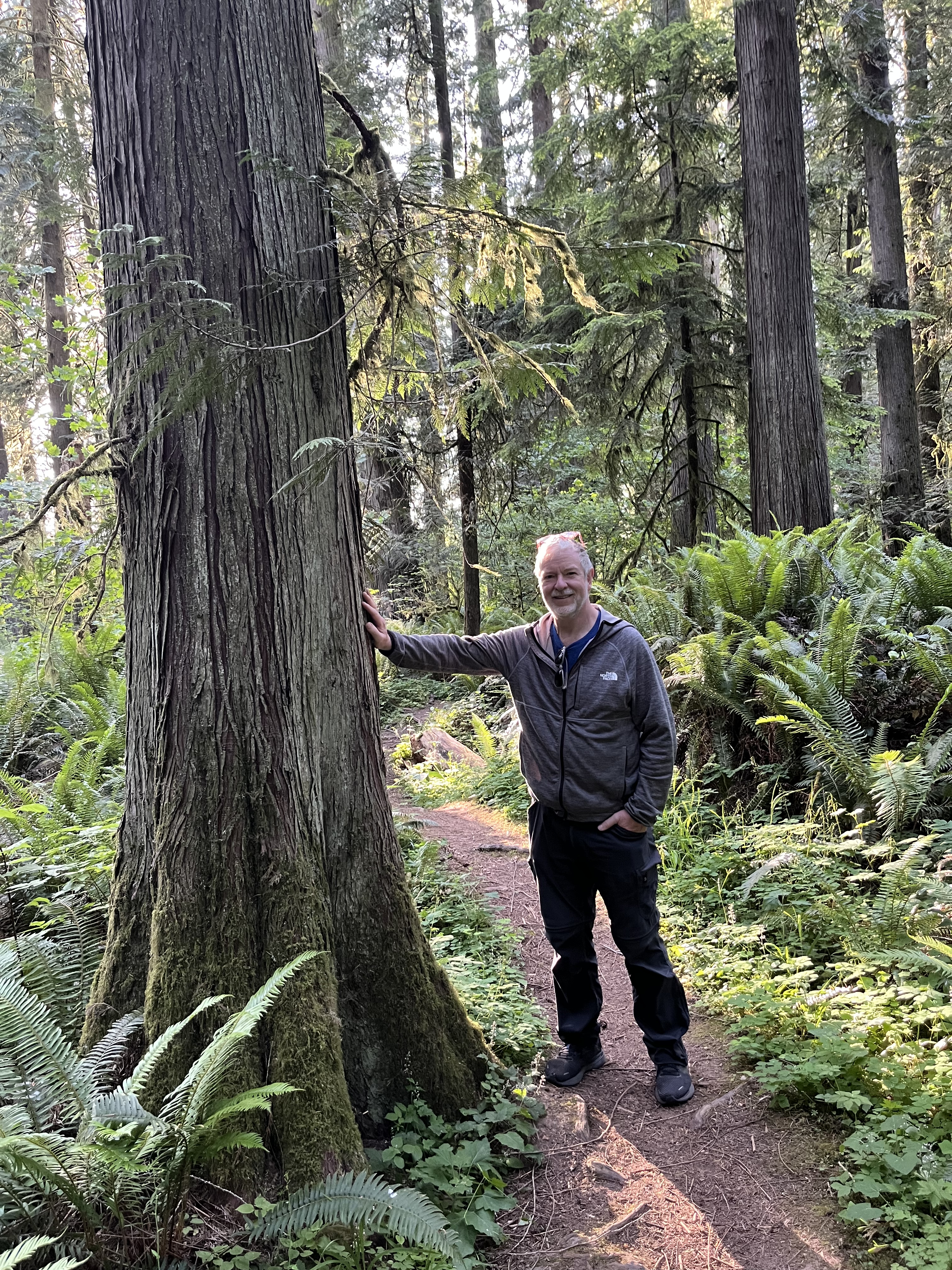
David
(Written in Ainsworth State Park, Oregon, Columbia River Gorge)

 The Voyage of the Tramper