After many beautiful vistas, many miles of epic hikes and bike rides through lush Pacific Northwest forests, and many delicious fresh picked cherries and strawberries, we are now turning back east.
When David and I first got married, I began to notice his normal states of being. He has two: busy and asleep. At first, I started to notice the disparity between he and I. I would be having a nice rest and see David zipping around and perceive the difference. He really doesn’t have much down time. No leisurely reads or long meals. I have managed to teach him the luxury of being at rest after dinner but the rest of the day, he’s accomplishing things. I quickly learned not to feel guilty. David is David and I am me.
We’ve done lots of fabulous activities on our trip so far and honestly I am more active now than when I’m at home. There is lots of driving of course, but we have been doing hours-long hikes and bike rides.
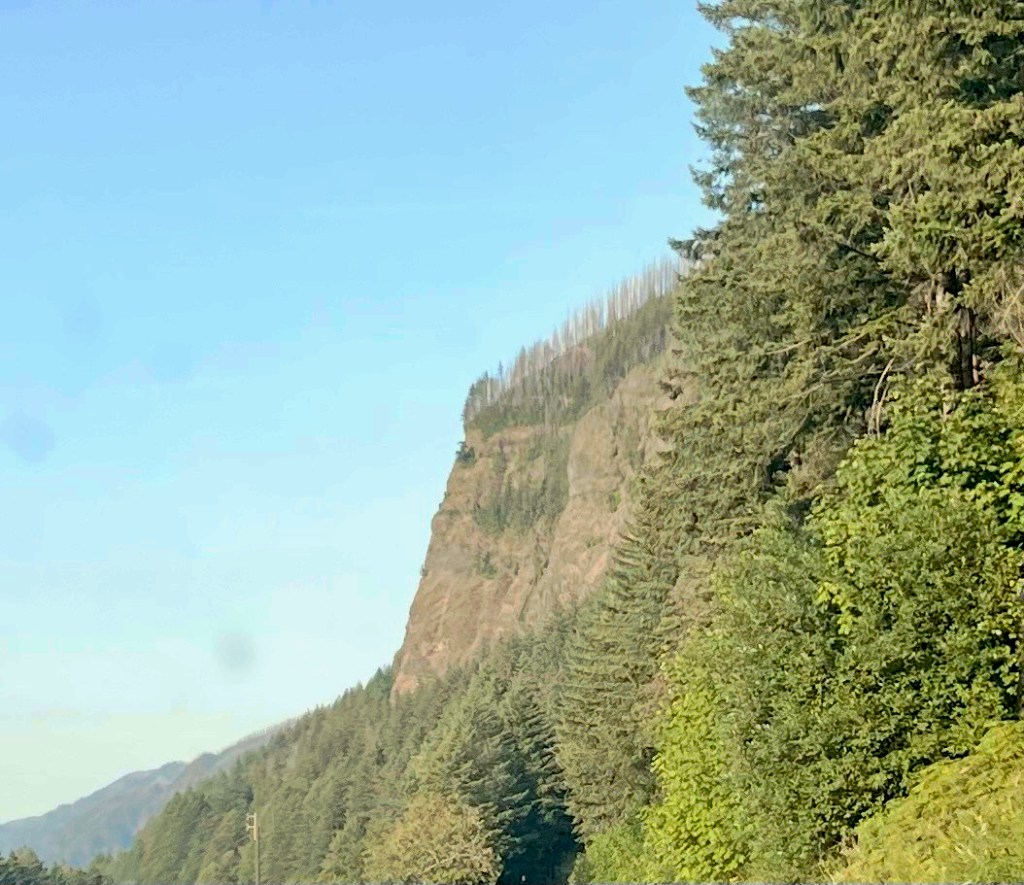
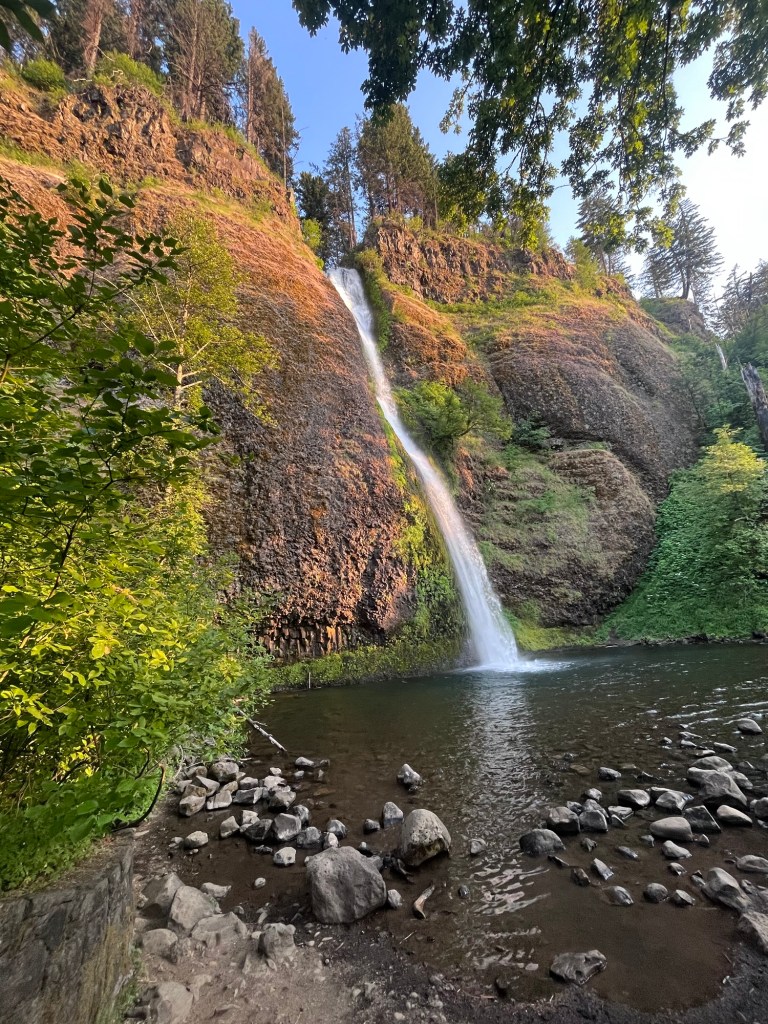
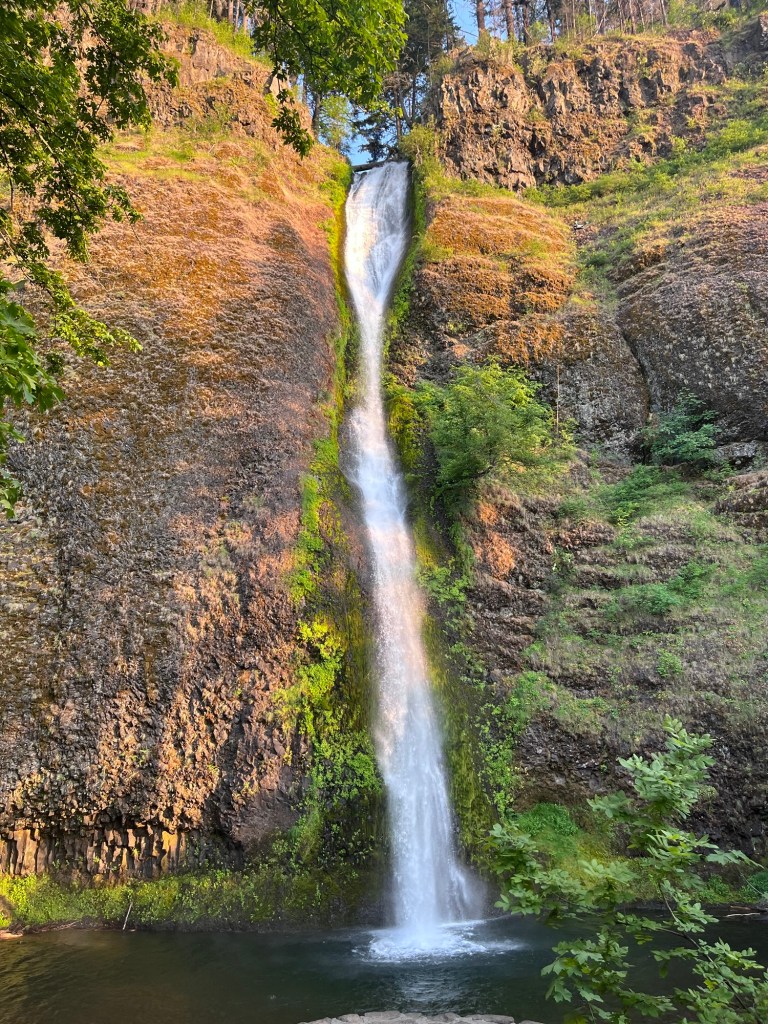
Waterfalls in the Columbia River Gorge
Multnomah FallsMultnomahForest fire remainders up topHorsetail FallsHorsetail
Summer Skiing
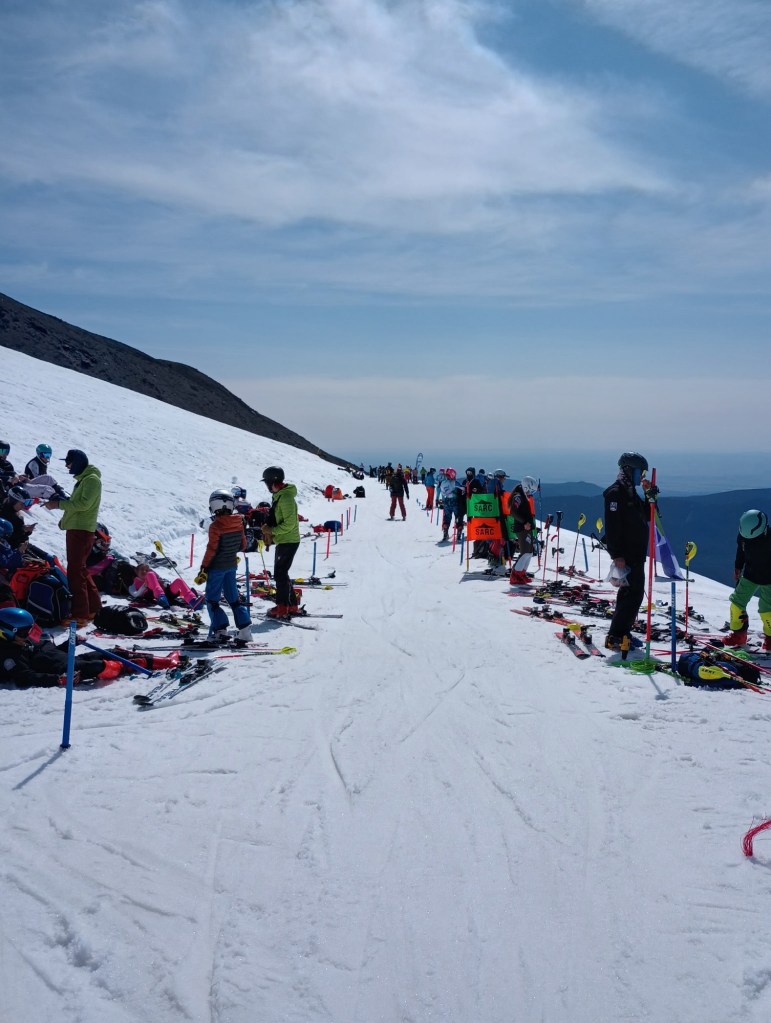
David and I like to ski. The degree of like is different. David would ski everyday, all year if such a thing were available. I love summer and so would not sacrifice a single day of it. There’s a beautiful mountain in Oregon that offers skiing all summer on a glacier. Mt Hood is famous for the quality of its summer skiing. David and I agreed that he should ski it!
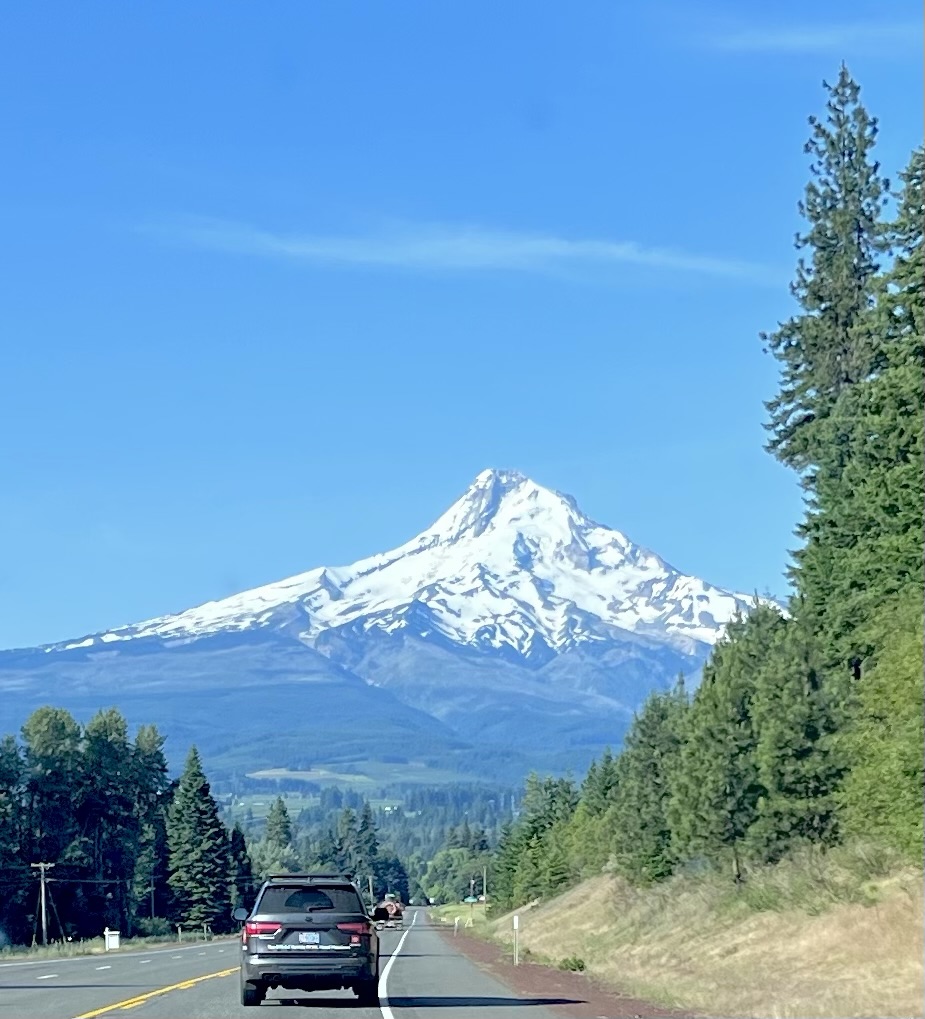
Approach to Mt HoodHundreds of racers from all across the country come here to train on the excellent snow.David rented equipment since all of his was back in Baltimore
Too bad we didn’t bring any ski equipment but there wasn’t room in the van for bikes and bike stuff and hiking boots and ski equipment. David was really missing his customized boots, perfect skis and helmet and goggles.
Here’s his report on the day: “An indulgent and unexpected treat!This was not a ski trip, I owed Jane a warm trip that wasn’t centered on skiing. But knowing I’d be an hour from Mount Hood was too tempting. the tease started with an email from Liberty Weinbrecht race camps for $1,999 for a week of masters race camp at Mt Hood…
So a clear Monday would be an exceptional thing! Jane loves to ski, but “it’s a Winter sport”. So off I went without my favorite accomplice. The Summer skiing there is legendary and hundreds or thousands take advantage. It is a perfect, open snowfield, glacier that offers consistent and ideal snow lasting from 7:00 AM till 2:00. The shop sent me out on a pair of Volkl Deacons, 79mm underfoot. A decent compromise though the boots felt like trying to ski wearing a pair of helmets. After a tentative hour, wondering where the next turn began, I found aggressively tilting the skis and dipping my hip was the only answer. Hard driving fun. And of course I met someone who moved the same pace. Simon (Jin Mon) was taking a break from flight school in CA and visiting from South Korea. As usual his English is far better than my Korean, and we shared a great day!”
The Trail of Ten Falls
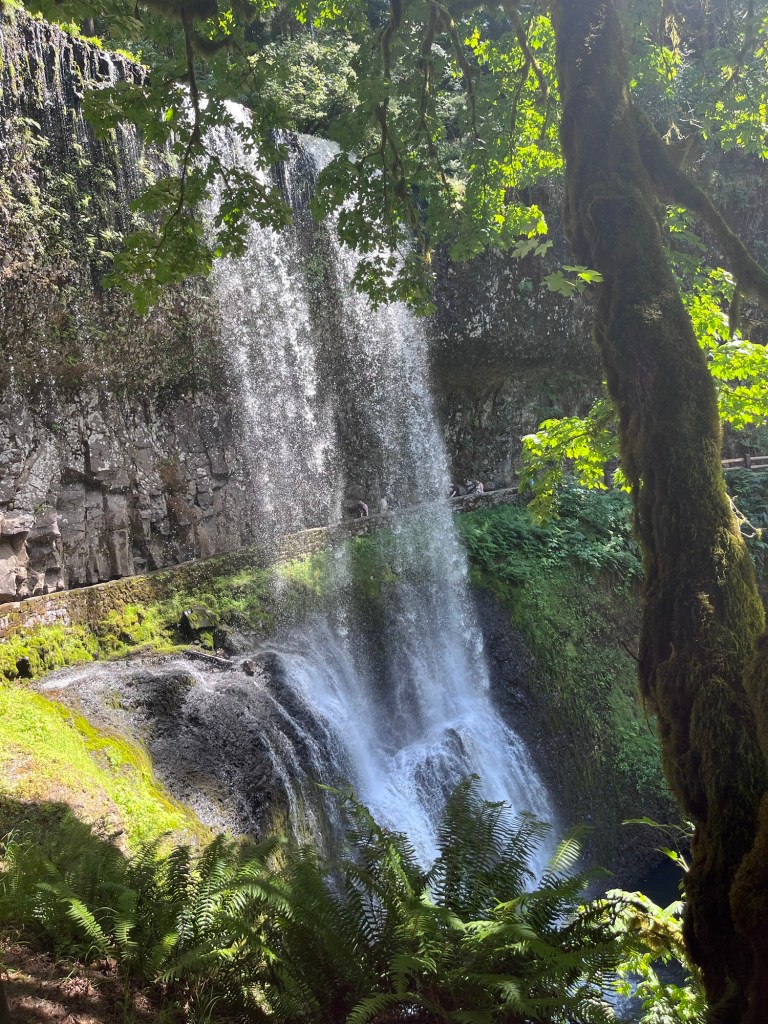
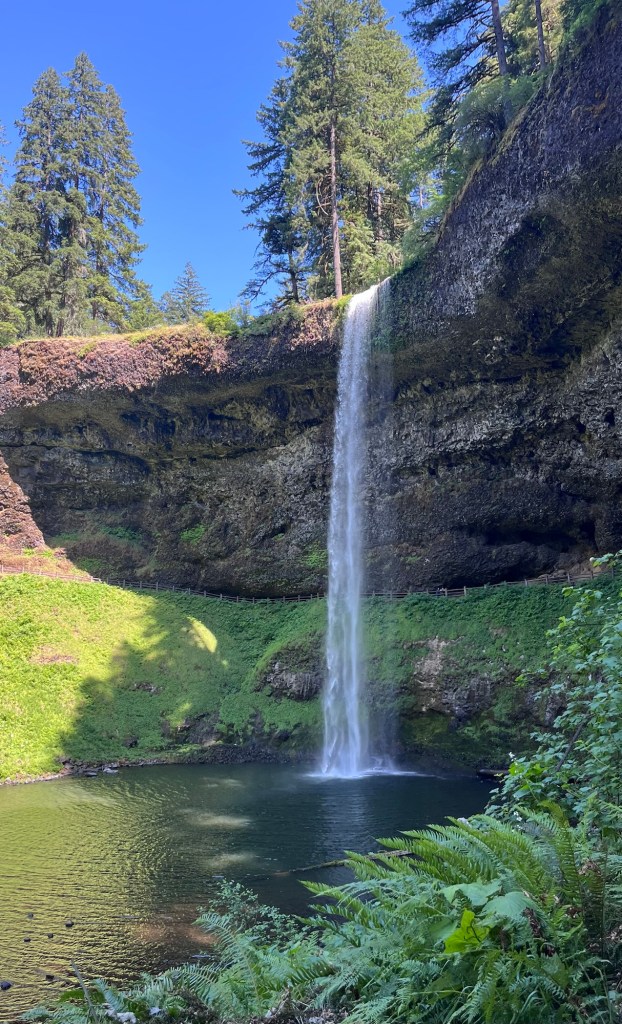
More waterfalls! There’s a beautiful trail in a canyon in Silver Falls State Park in Oregon that takes you up and down beautiful paths where you can view and, in a couple of cases, walk behind 10 stunning waterfalls.
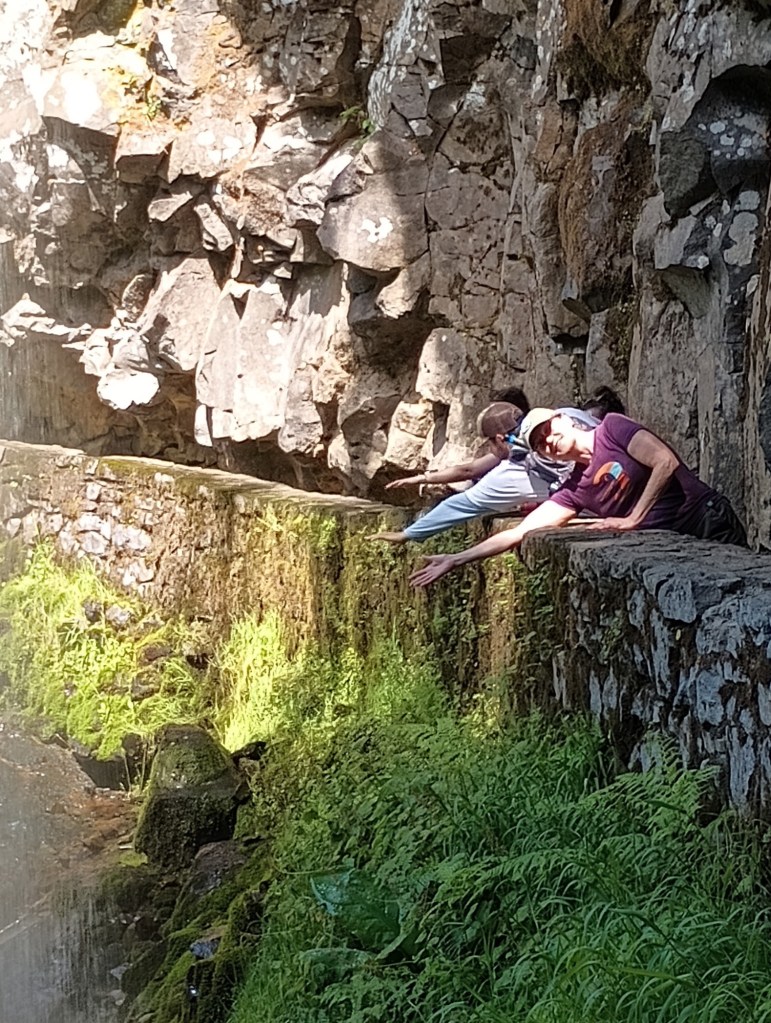
There’s a walkway, built by the CCC, under this waterfall. You can feel the spray as you walk behind.Here I am. Feeling the spray. With a copycat stranger.
The trail to view all 10 falls is 7.2 miles but David and I took a wrong turn somewhere (in our defense, the signage is terrible) so our mileage for the hike was 10.8.
Slo-mo waterfallLush PNWSo many stunning little vignettes it’s hard to choose the best
Before the state park was established in 1937, some shenanigans used to take place here. A logger named “Daredevil Al” plunged from the top of one of the falls in a boat. Miraculously, he didn’t die. In the 1920’s, an ‘owner’ of the South Falls charged visitors to watch him push junk cars over the edge. It was a different time, when resources and beauty seemed endless and we would never run out. Thankfully, subsequent generations have learned to love and respect these treasures. As did the original inhabitants, the indigenous tribes of the area, the Kaliyah and Molalla.
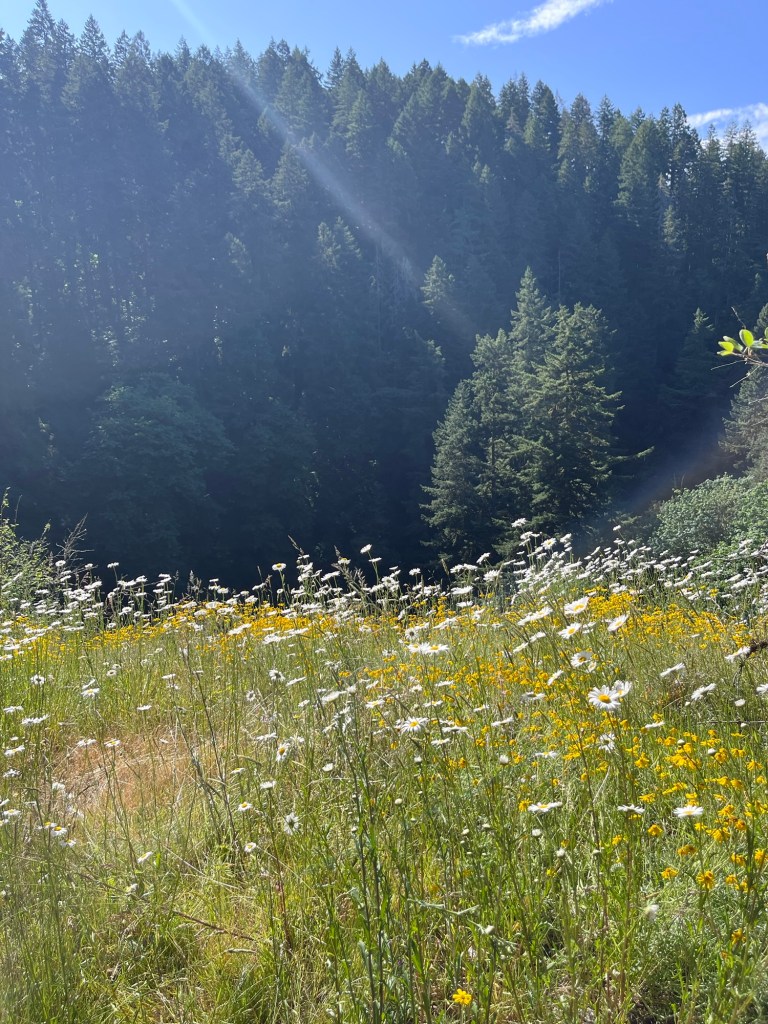
Oxeye Daisy and friends
Jane
(Written at Juniper Cookhouse and Bakery in Hines, OR)
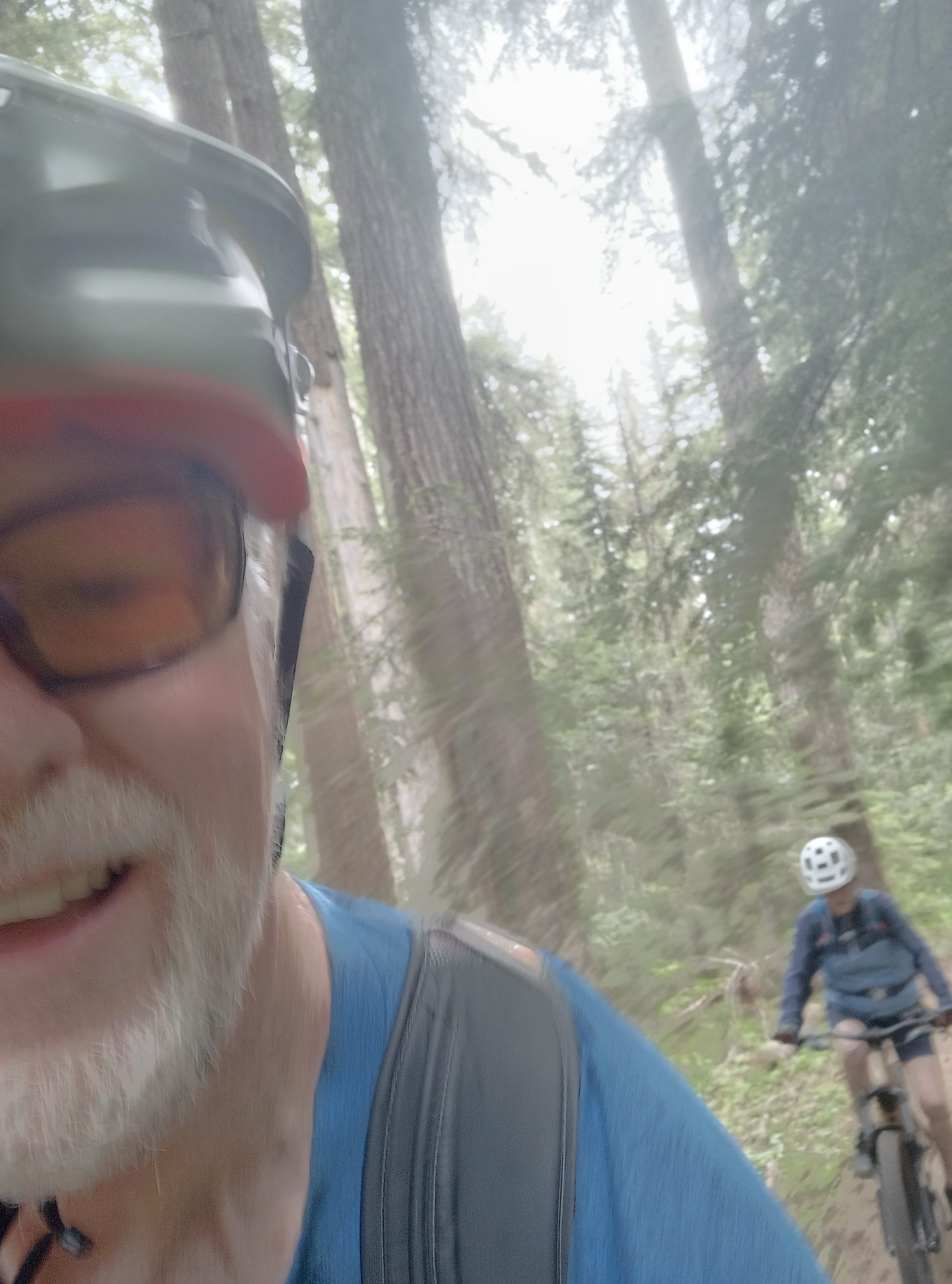
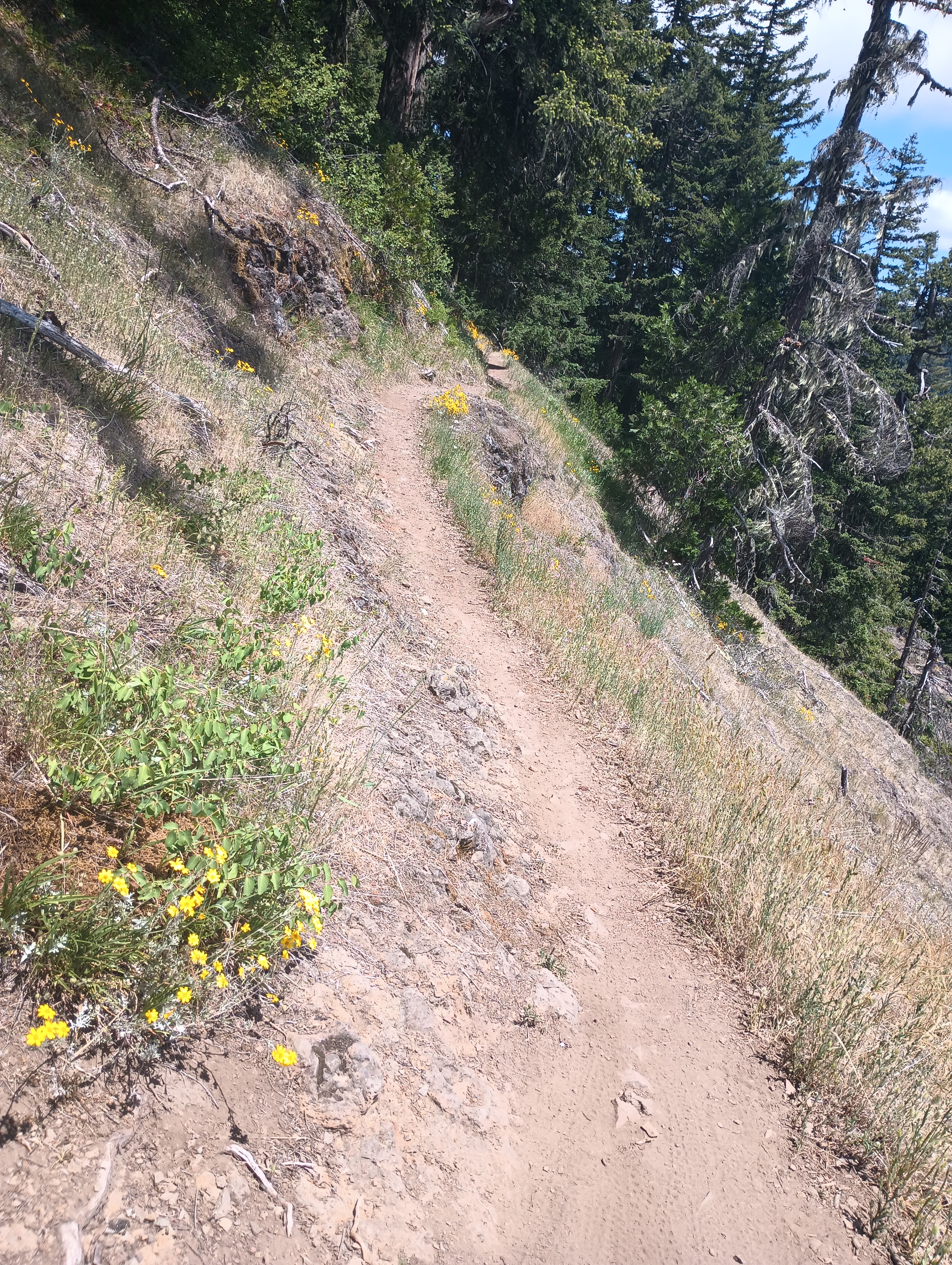
A dear “moved-away” friend, Morgan sent me Singletrack’s “Best trails of Oregon”. A bit of reading, map gazing and description perusing later I selected Oakridge and considered riding up gravel roads to do half of their signature trail. One stop in the bike shop and I was swayed to take the shuttle. That led to their flagship “Alpine” trail which gave us 15.6 miles, 5,846 ft of descent and 2,484 of climbing mixed in just to keep it a pedaling mountain bike adventure. 3 hours, 39 minutes later allowed time for wildflower pics, fearful scampers around a few over exposed outcroppings and an over-all great ride. Worth the drive to Oregon!
Our outfitter and shuttleCatching our breath at an overlookNot the bermi-est spot, but a sampler (I wouldn’t stop to miss the bermi-est moment!)Selfie of US in motion!A bit more exposed that suits comfort. Trust me, it was way worse in person (and we didn’t take pics at the scariest moments)Amazing what just a few feet of dirt downhill of the trail does for confidence. (Jane was amazing throughout!)Just an average glance downhill wondering how much further there is to go?
David (written at Juniper Cookhouse, Eastern plains of Oregon)
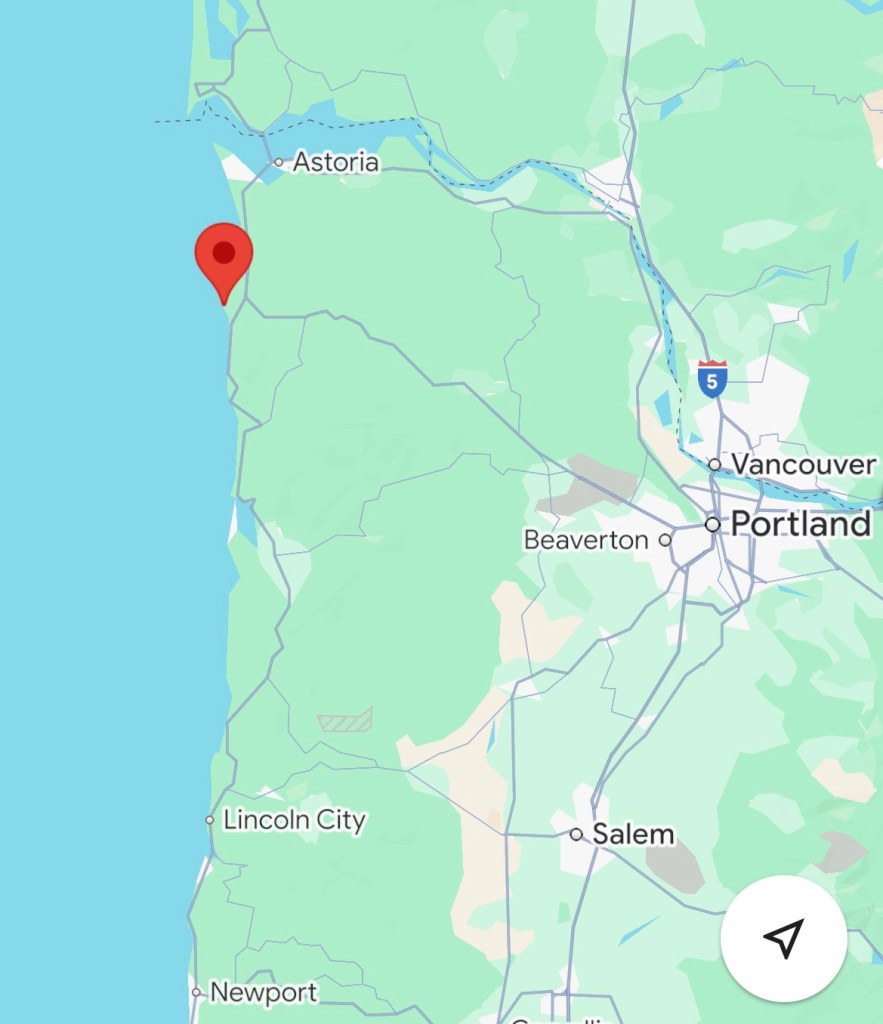
A few days ago, as we headed down the Oregon coast, we stopped in a small city called Astoria. We soon realized that the people gathered on the sidewalks along the main drag were a No Kings protests.
We live close to Washington, DC so we’ve been to a few protests since 2017. We had hoped to participated in the June 14 demonstrations, but we’re on the road. How nice it was to find a like-minded group on the way.
We had no signs but we had our voices! A nice person was handing out small flags and we made good use of them.
Two hours later, we were a bit hoarse but were so glad to participate. Our country is worth saving from the cult that has overrun it.
Jane
(Written on the road somewhere between Portland and West Fir, OR)
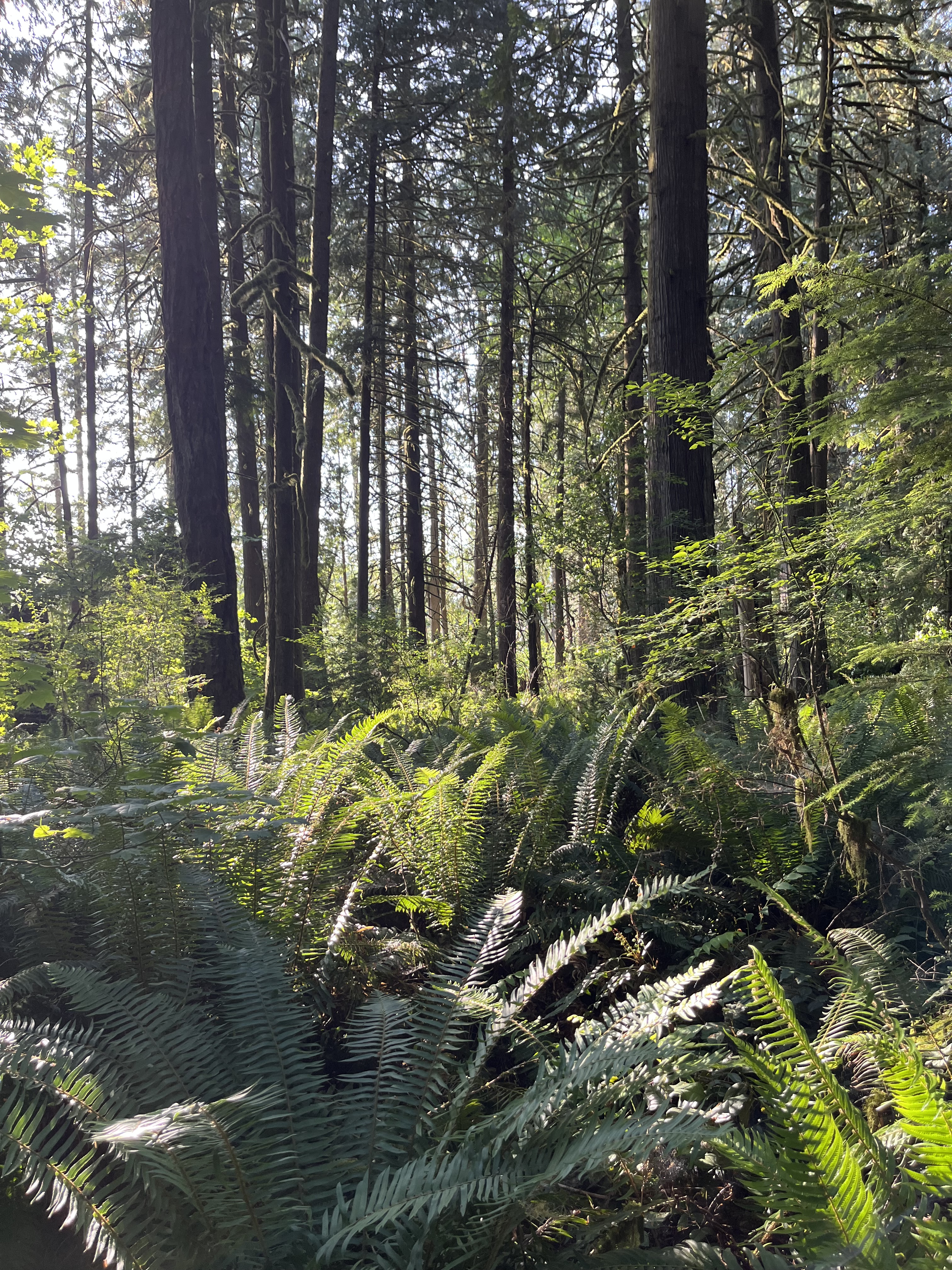
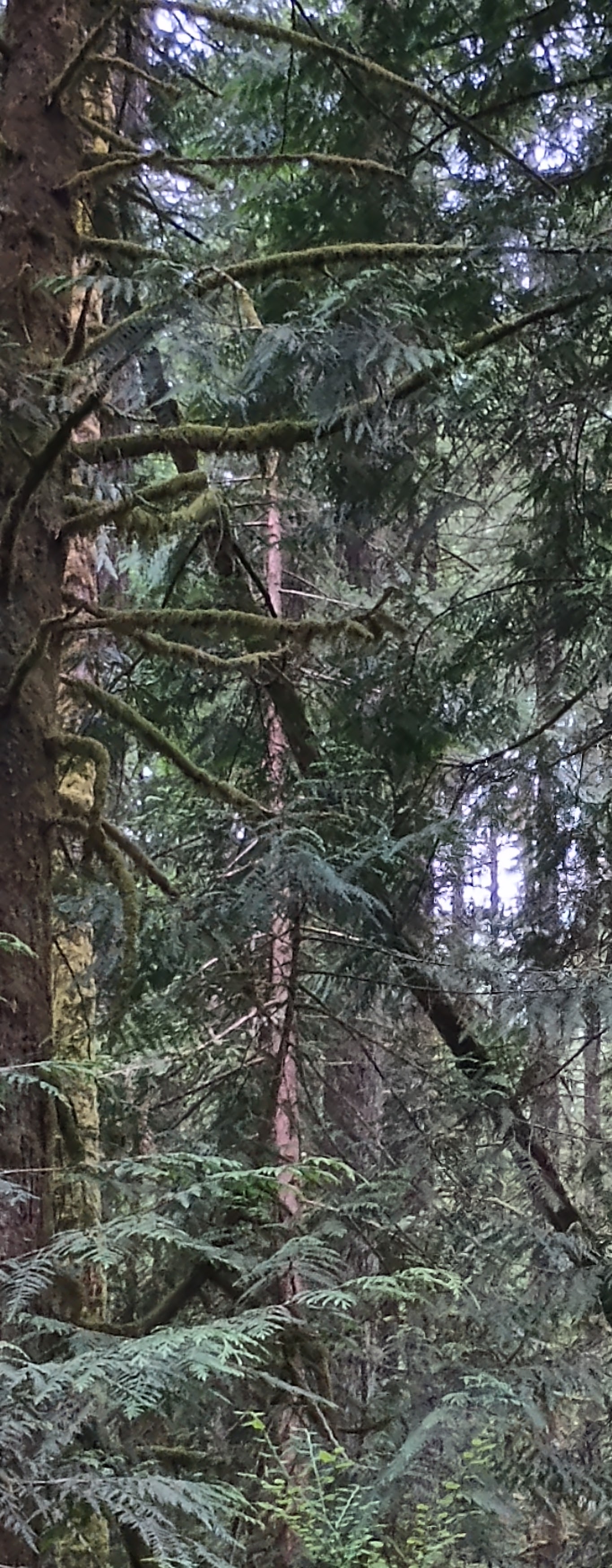
This post was going to be pictures only, no words. Then I realized I am actually going through some complex processes and thoughts I’d like to share. Don’t worry, they’ll still be pictures. The challenge lies in all my prior knowledge, learning and innate beliefs being cast upon the reality of the woods around me.
I’ve always loved the woods; peace was found, trouble was hidden. Walking, riding, just standing and looking/listening/smelling. This trip sent us places we’ve never been and added not only to my joy, but to my understanding. The woods in Davis, WV were decimated by man for coal, timber and even bombing runs. The regrowth there is hard to fathom and so I mostly just ride there and enjoy the shade. Taking it in, but for granted.
Truly no expert on any of this, I’m sharing my own overwhelming introduction as it rolls from state to state. This road is changing and adding to my viewpoint. I knew from movies and pictures that the West and Pacific Northwest would be a spectacle and an experience. We’ve been in Alpine and Sub-alpine forests. I’d heard a tiny bit about Coastal Rain Forests but the name Pacific Temperate rainforest is the more correct term. These areas get almost 10 feet of rain annually and have mostly moderate temps from 50-75 degrees F year round. Lots of growing time and lots of competition for sunlight. The Alpine areas I love to ski in get snow and somehow survive the wild swings of harsh Winters.
We have truly embraced them all throughout, but the PNW trees have shaken me to more attention. They have rescued us from the heat and unrelenting sun of the plains. We were surprised to be seeing a 101 degrees reading on the dash after leaving Three Rivers, Idaho. We had been in a forest that was cool and crisp, loved adding a jacket and hat to cook breakfast. Suddenly, a few miles later we were shocked driving up the highway and hiding in the shade just pumping gas, placing foil in every window for only a few minutes shopping in a market.
Perhaps the first reprieve was on Moscow Mountain, Idaho with Lodgepole Pines, Douglas Fir and Western Red Cedar. The woods there welcomed us in and delighted with the green smells and breezes. Though we saw the beautiful areas, lush hollows and tight shady places in the rides, there were timbered places and widened dirt roads (like where we saw the moose and calf). Other than those roads, the timbered areas were not so obvious. But as we drove through the town of Troy, Idaho we were overwhelmed by the unmistakable smell of cedar and witnessed a sawmill working through the night. Quite a busy sawmill with acres and acres of cut timber lined up and readied for processing.
I reminisced about the nice forests in Montana near Red Lodge. There we also witnessed thousands of acres that had burned. We heard of fires in 2020 and other years, noting bare places of carnage and seeing new growth beginning to recover. We found burnt pinecones in places spurred by the fires to send out life. We saw so many bare acres we seethed when we saw kids at the next campsite playing with a fire in their dad’s brief absence. We nearly grabbed the host when luckily the dad came back and tempered the kids by stopping their games with leaves and pine needles.
Then driving further West into Washington, we were again assaulted by the hot sun on the plains. So much so that we took refuge in a Quality Inn. Air conditioning, water refill, a shower and charge-ups of all electronics were needed along with the almost 9 straight hours of sleep.
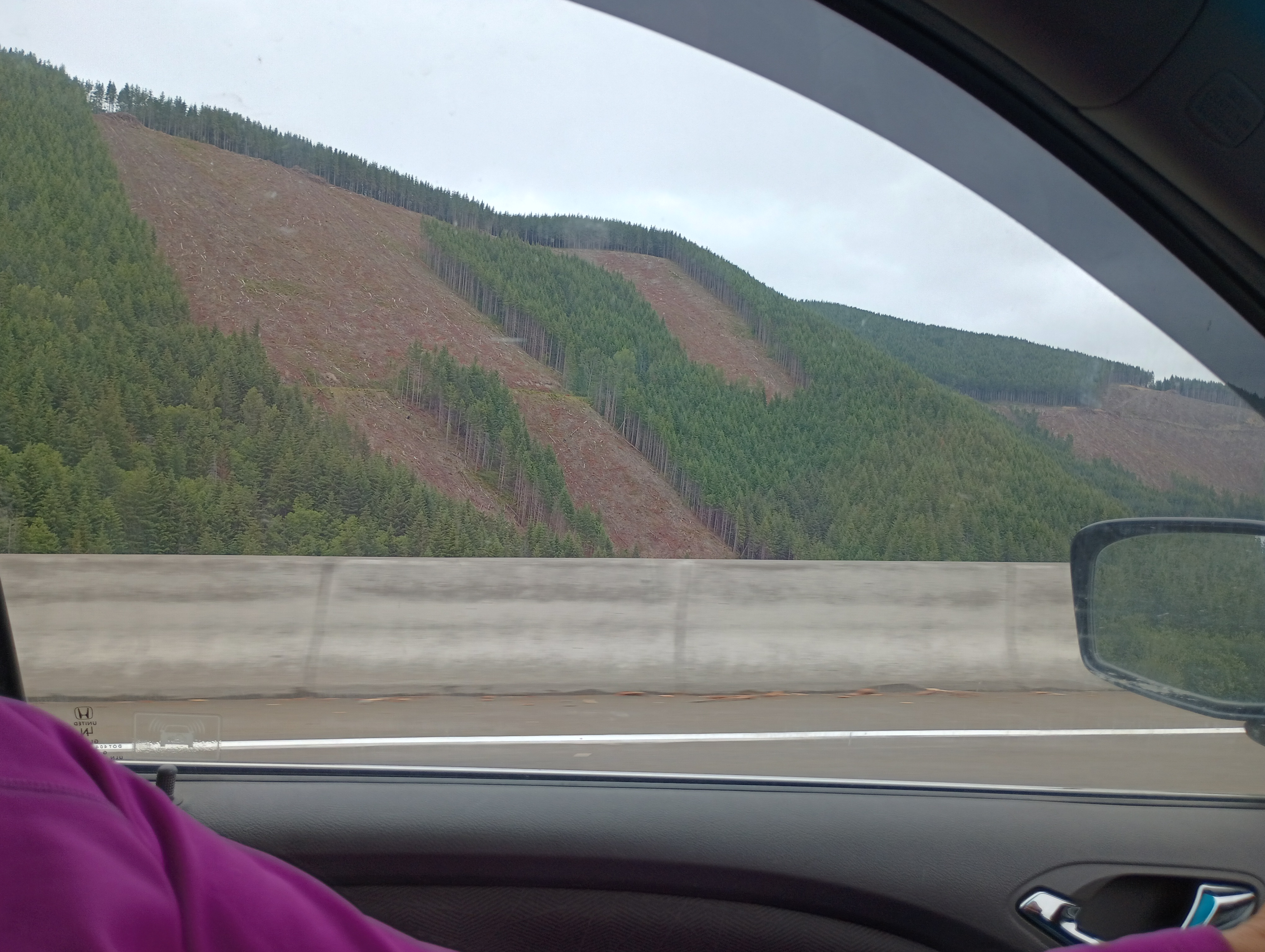
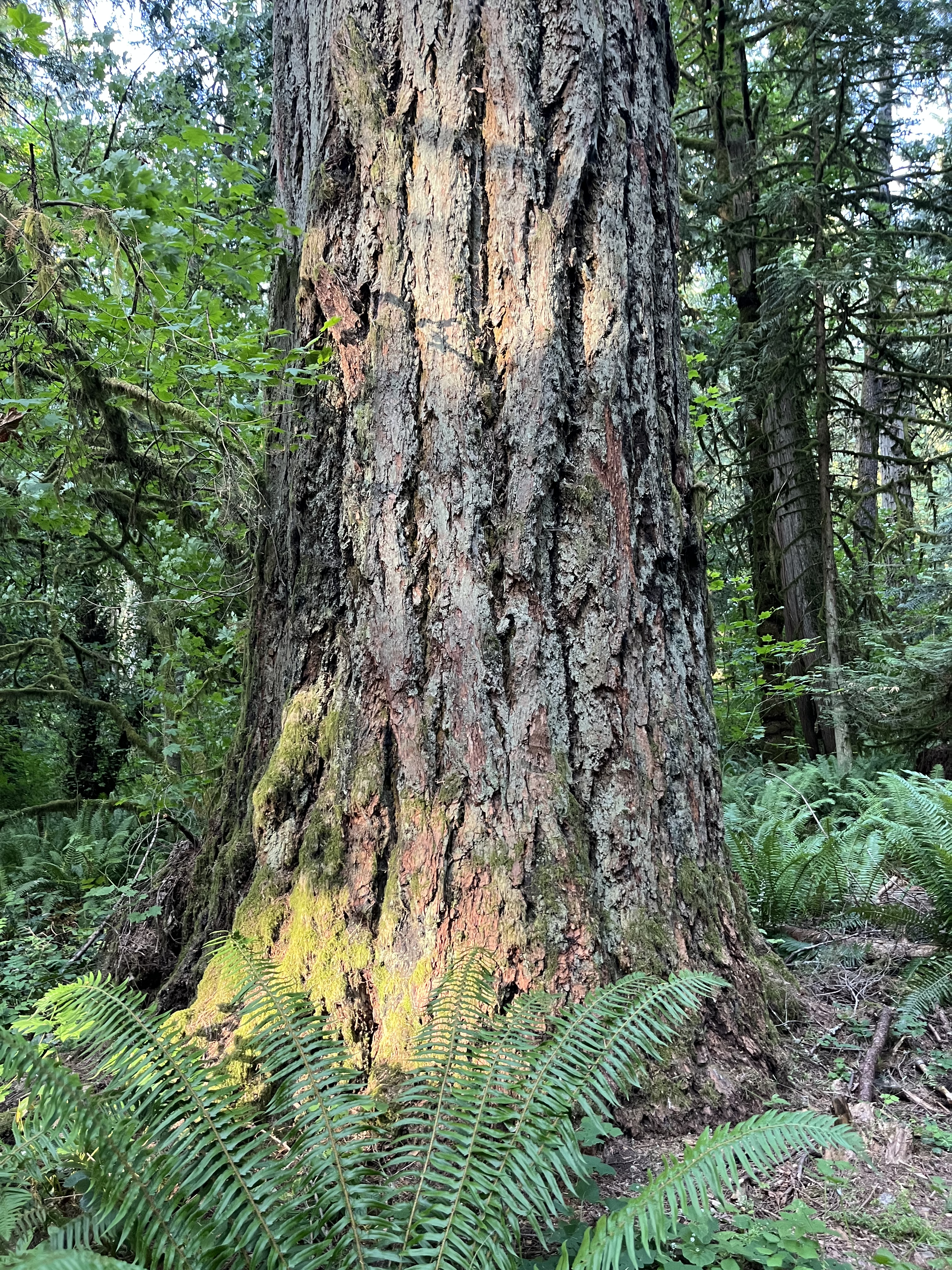
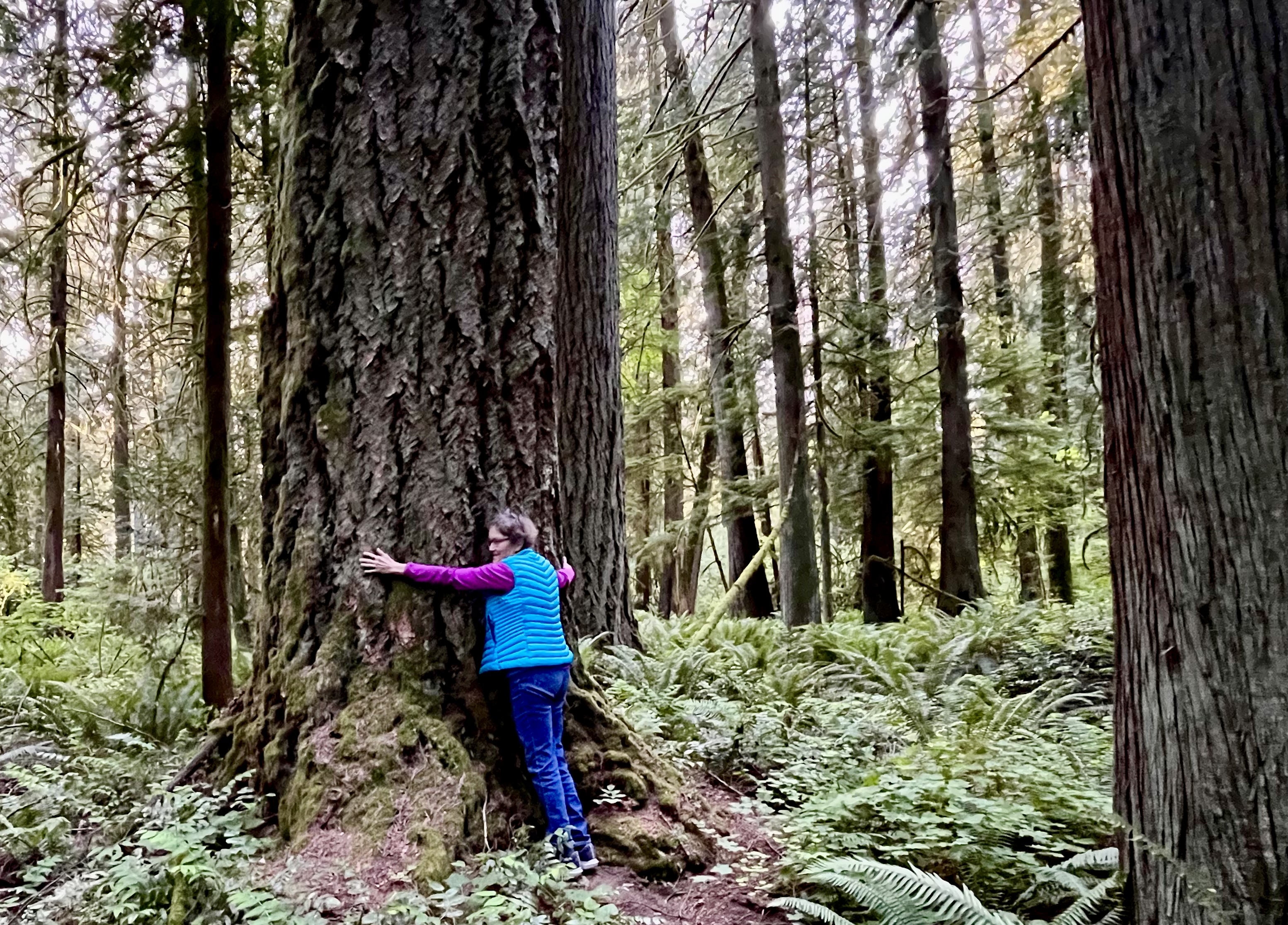
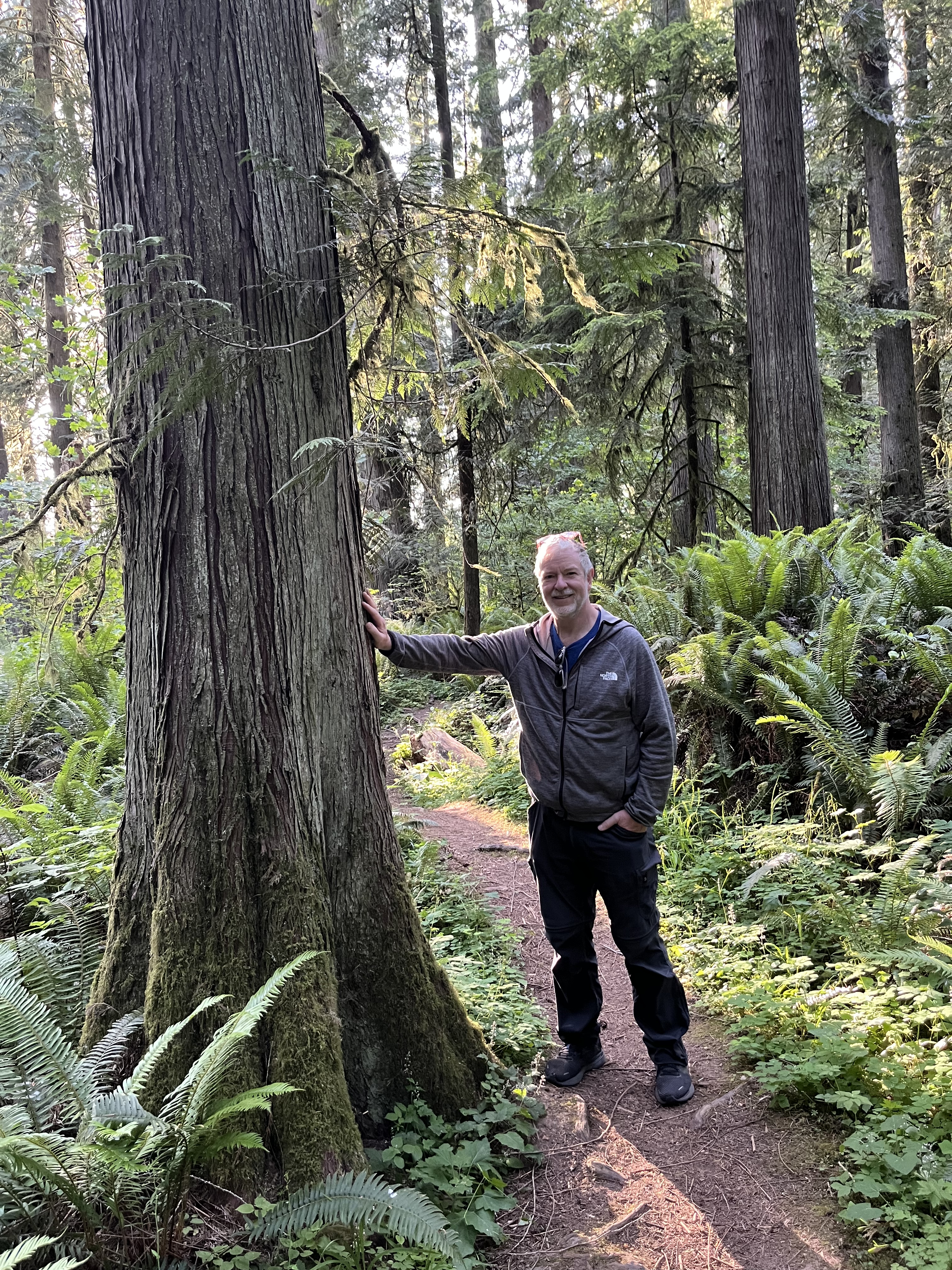
The next turns included traffic jams in Seattle, then to Dash State Park South of Tacoma. Another great forest! Still brewing my reactions we went to perhaps the “oldest growth” yet in Lewis and Clark State Park. The first day trip from there took us to Mt St Helens. During the drive we saw bare hills, roughly stripped of every tree, other mountains stripes of tall trees between bare patches. Whole mountainsides denuded of all trees as well as varied areas replanted and labeled with the year planted. But the 616 acres were an amazing refuge in Lewis and Clark State Park, so much we stayed two days. The green, ghostly snags and even living trees were massive co-working organisms to gawk at. They got me looking, thinking and writing all this stuff.
Suffice to say, between natural fires, large and small, Cataclysmic volcanic events and logging we’ve seen trees challenged, blasted, scorched and removed. Filling our knowledge gap came from an unexpected source. We went the road less-travelled and entered Mt St Helens National Volcanic Monument bypassing the National Park Entrance and visitor center.
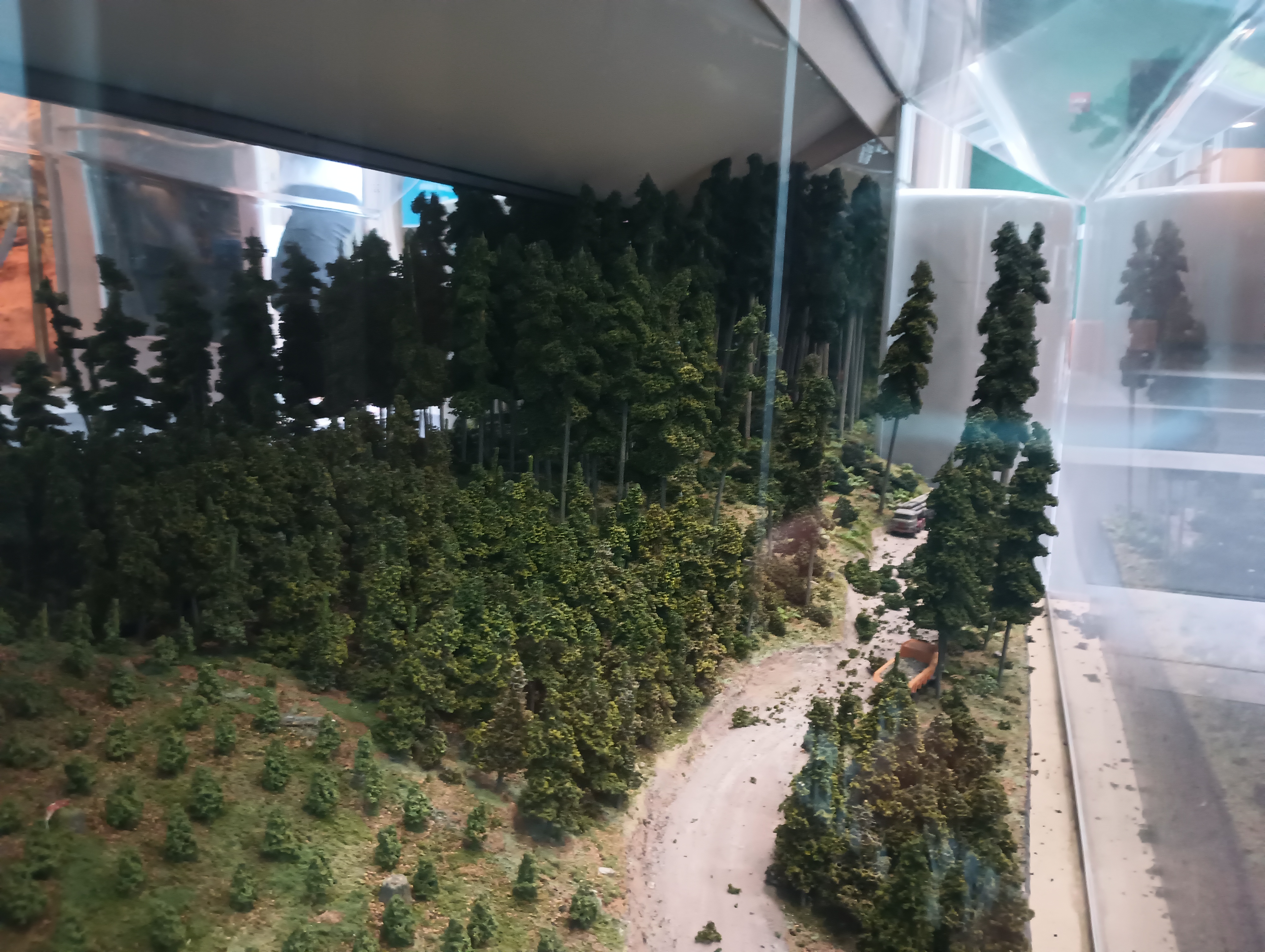
This led us into a Weyerhaeuser “Forest Visitor Center”. We braced ourselves for logging propaganda but got much more. The cataclysmic events of the eruption took out 1500′ of mountain May 18, 1980 was a natural event that decimated 130,000 of acres of trees. The river was completely changed and raised ~180′ by a 5.1 earthquake and the largest recorded landslide ever with boulders, piles, silt and massive glacier melt flooding. The mountains all around had trees leveled like toothpicks. Nearly 68,000 acres was being managed by Weyerhaeuser before the blast, so they were integral to the plans for recovery and replanting. (Of course they harvested every bit of lumber they could over the two year period)
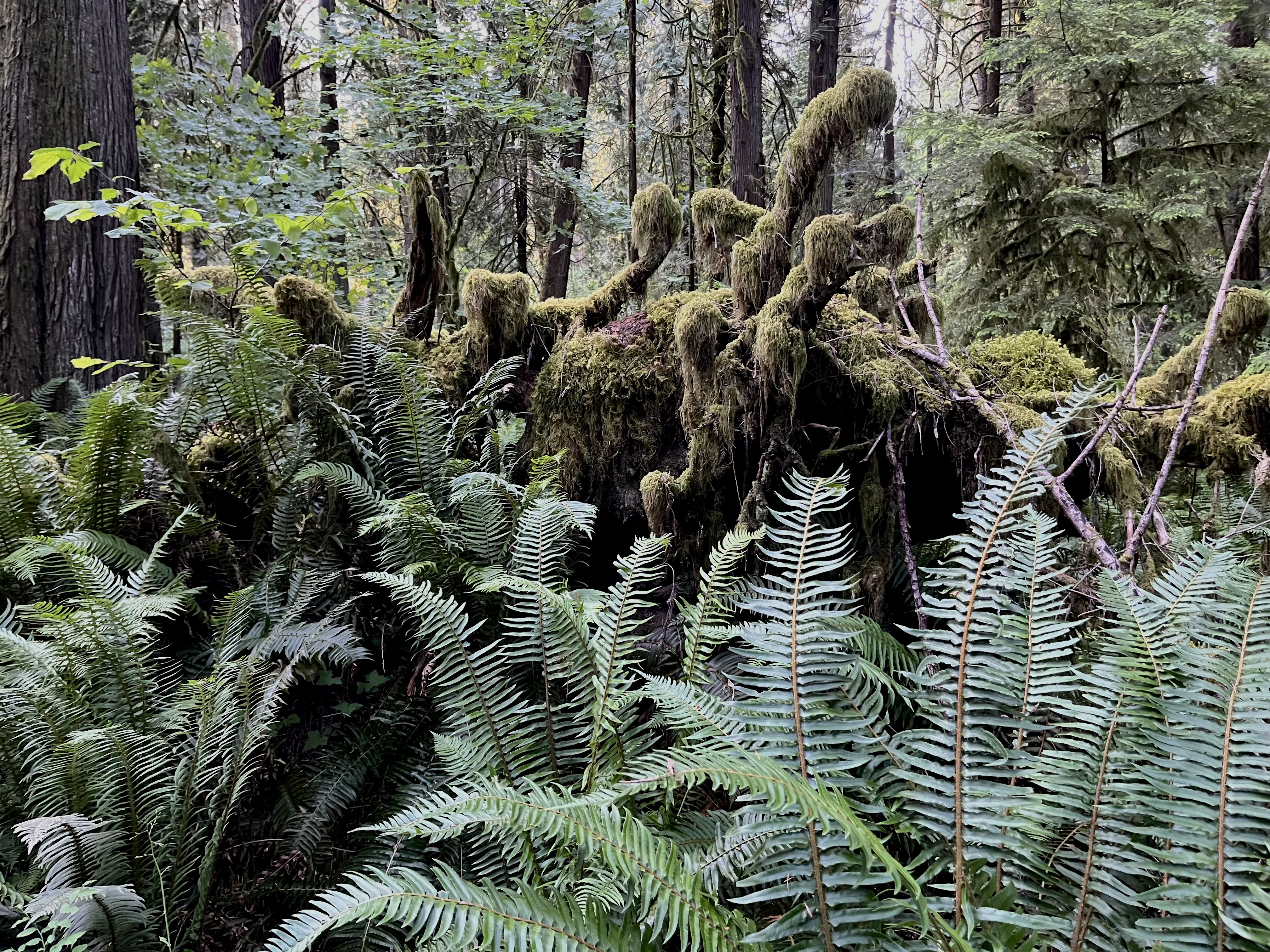
Inside the blast zone nature was allowed to take its course. Jane and I hiked the “Hummocks” area in which nature alone was allowed to shape the recovery. The Hummocks are hills formed by debris, with pots of sinkholes from melting glaciers as well. The trail wound its way upward and around some areas where old growth trunks were still visible, protected from the blast but dead all the same and clinging to where they had stood.
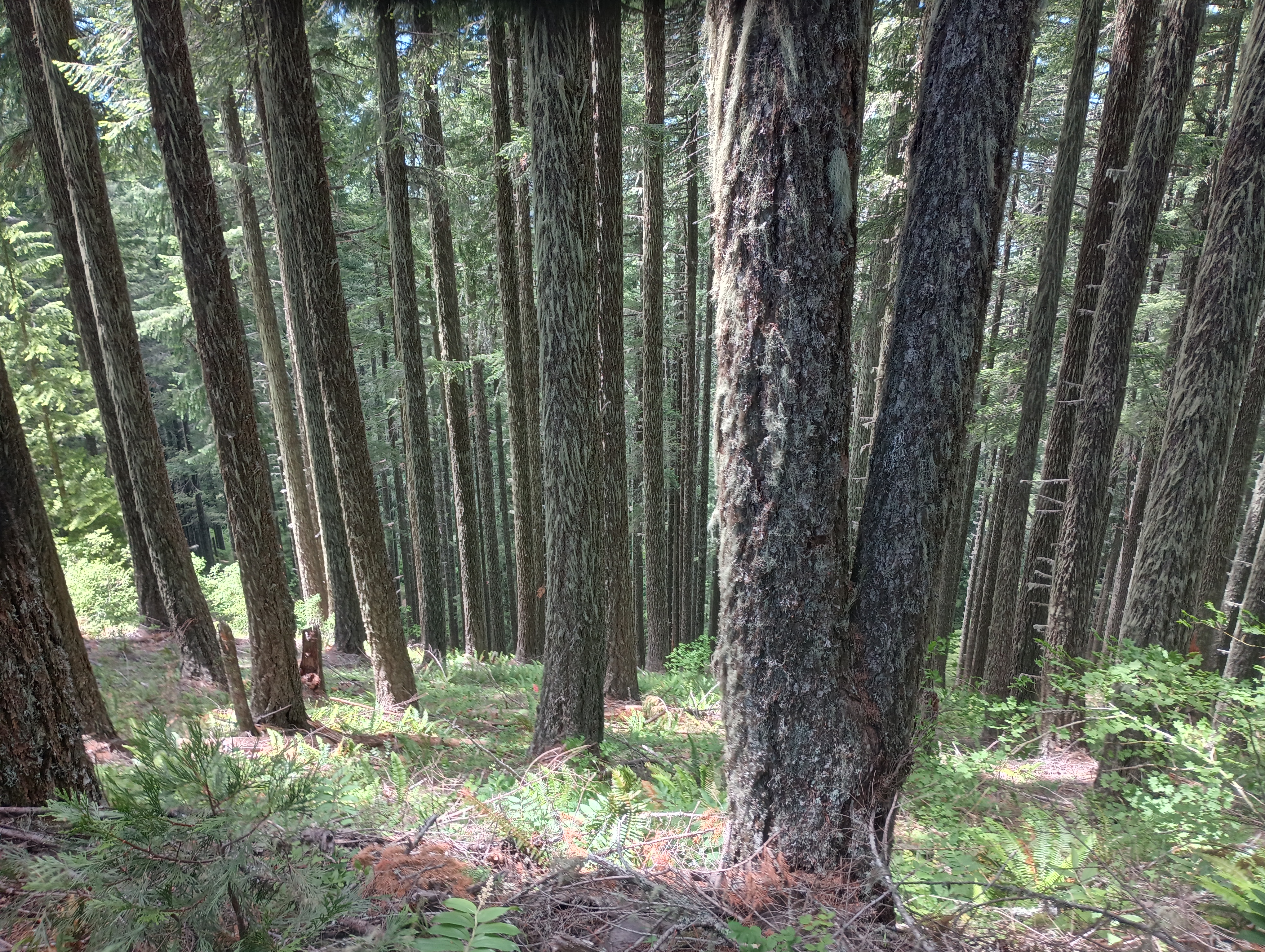
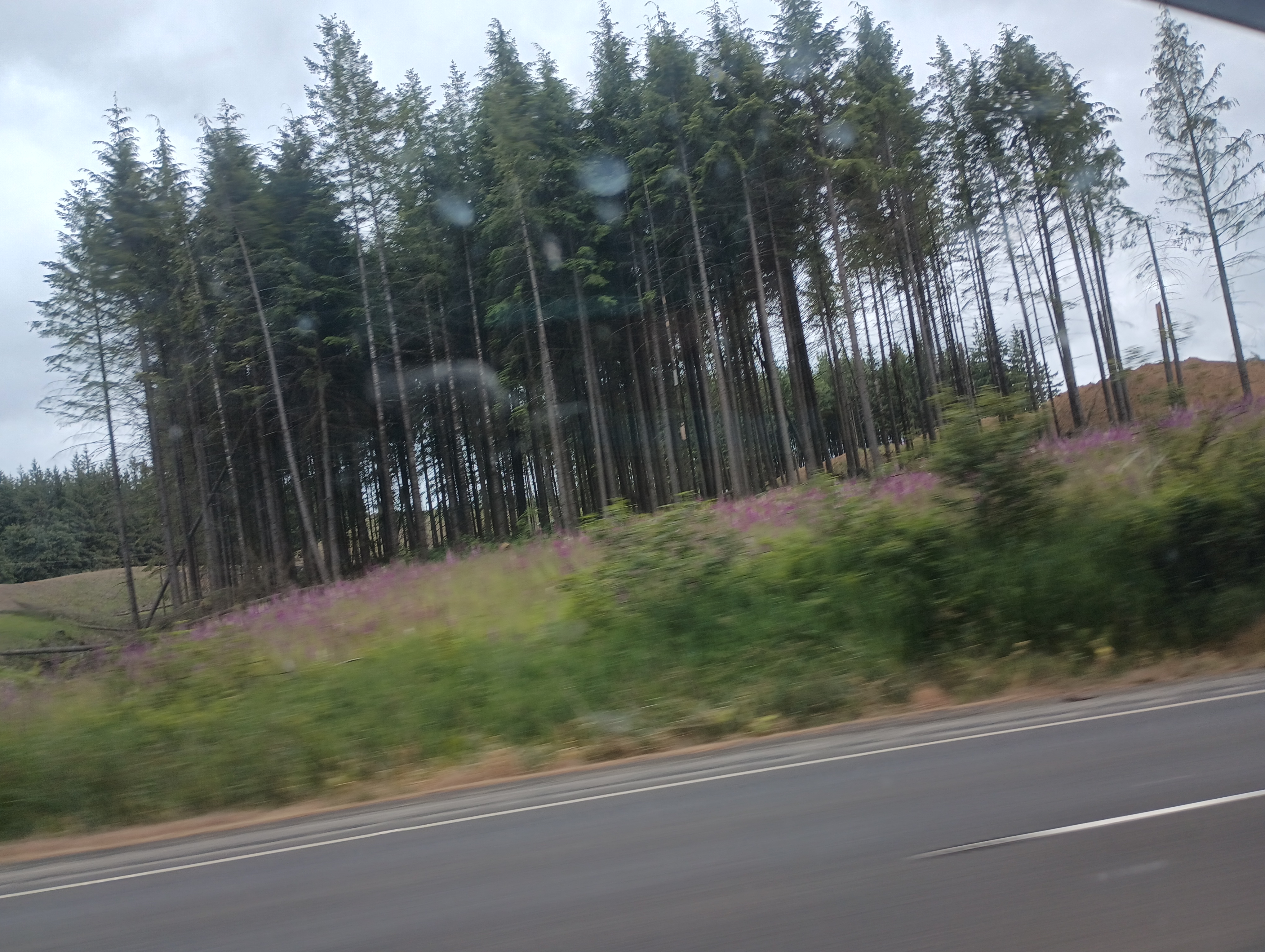
Outside the blast area and on their own properties, the timber companies prepped and planted on a massive scale. The natural areas have deciduous bushes, trees and early conifers but are far far behind the planted regrowth in the timbered areas. These had multiple layers and plots of trees of varied heights depending on when they were planted. The mature ones started in 1982 look “almost” like a natural forest. But, they had a sameness, a lack of variability that betrayed their nature. They were a near mono-culture. They looked “too perfect”. So now I’ve seen layers and layers of nurtured forests. Often they lay 50′ from the road, hidden by a thin veil of uncut trees or bushes only seen over big hills or turns. The secret bare places or trees planted 4, 5, 10 or 15 years ago hiding in plain sight. Enjoy the pics, sorry it took so long to share.
The trees individually and as forests thrive, grow, change and return any way they can. Of course we’ve all seen the sidewalks cracking from incessant return of roots and time. I don’t have much of a conclusion or summary, but I see the expedient return by the logging companies for profit. I see the slower more random way nature takes over, but most of all, “I see the trees in the forest”.
13 miles away in 1980! (Blasted by The eruption)Stumps left from the blastplanted 2021 (sorry for terrible pic, these signs are rare and pop up quickly)The ones to Left of car are about 5 years old, toddlersThis was pretty much someone’s small farm of trees Some examples of stripes of different agesBurn from 2017 above Oneonta GorgeBurn from 2020 deep into canyon near Red LodgeMore near Red Lodge (at first we didn’t know it was all from fire, we just saw dead trees and blight)Diarama at Weyerhaeuser visitor center (Forest Education center)Some goods we saw down the road, sheet goods. But they sell lots of boards, we saw literal mountains of sawdust near PortlandA tall snag, supporting insects and birds for 100 years before falling and enriching the soil for the next 50.
David
(Written in Ainsworth State Park, Oregon, Columbia River Gorge)
Today, we reached the apex of our journey and will be heading back to Baltimore. By “apex” I don’t mean the best part of the trip, I mean we have driven as far west as we will go. There are more adventures to come as we head east toward home. We will be visiting a certain National Park that holds a special place in my heart (GT). We will also be searching out some native, original prairie in the Midwest. Tomorrow, David will be skiing a glacier!
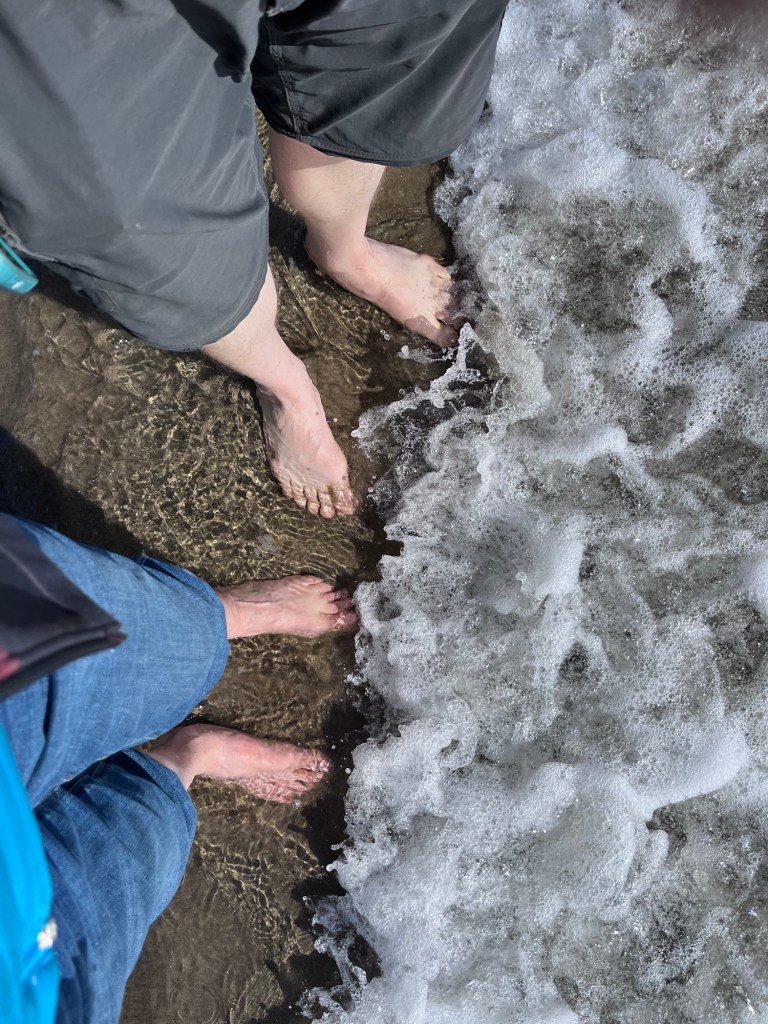
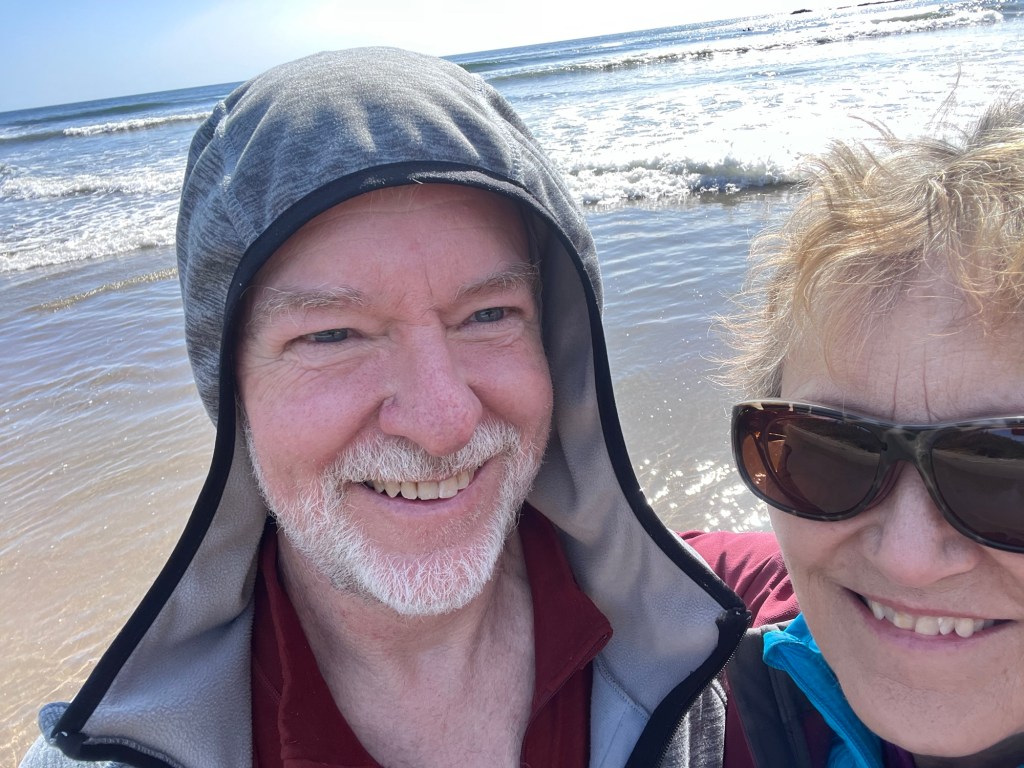
Here we are, getting our feet wet in the Pacific Ocean. if you recall, a month ago, we were getting our feet wet in the Atlantic Ocean.
A simple gesture, without an enormous amount of meaning for someone who can hop in their car and take a few weeks to drive across the country. But, we need our benchmarks. We all need a framework upon which to measure our lives, and our semi-ambitious trips.
The original Tramper Voyage, 2012-2013, was a bigger trip. (An ambitious trip?) We were on the road for 6 months after having quit our jobs. We could do this because neither of us were climbing the corporate ladder. We were a Physical therapist and a Nuclear Medicine Technologist, both were jobs that could be replaced at home or if we settled somewhere else.. We had over 20 years of experience by then and had many connections for jobs.
See more details about the 2012 Voyager farther down in this blog. If I had any computer savvy at all, I could probably embed a link at this point. But you’re out of luck.
As it was in Cape Henlopen, it was way too chilly to get in the Pacific Ocean water. The sea was beautiful. We didn’t see any sharks or any giant waves. I have a preconceived notion about the Pacific that it has giant waves everywhere. But it’s not true. These waves were placid and small, just as they oftentimes are in the Atlantic. It smelled good, looked good, felt good, sounded good. Very restorative for a tired traveler.
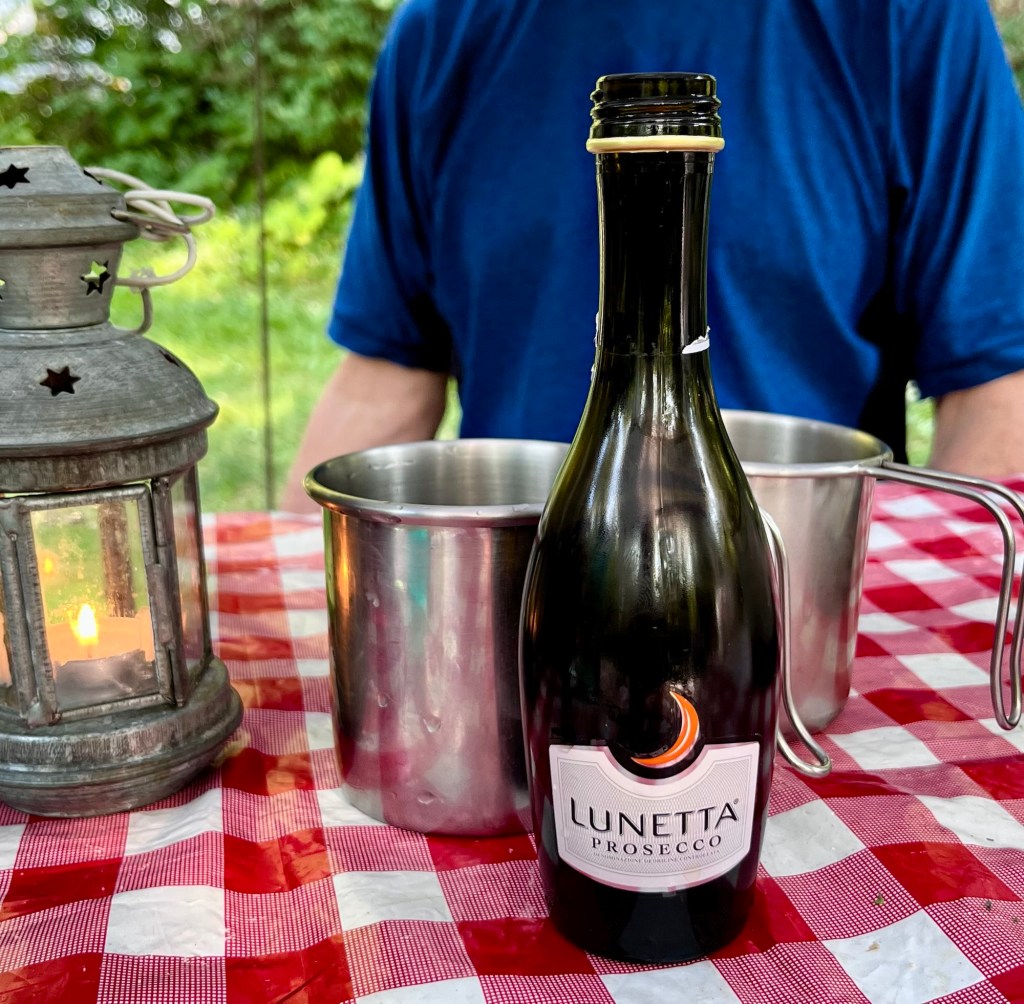
We celebrated back in camp with a lil bottle of bubbly.
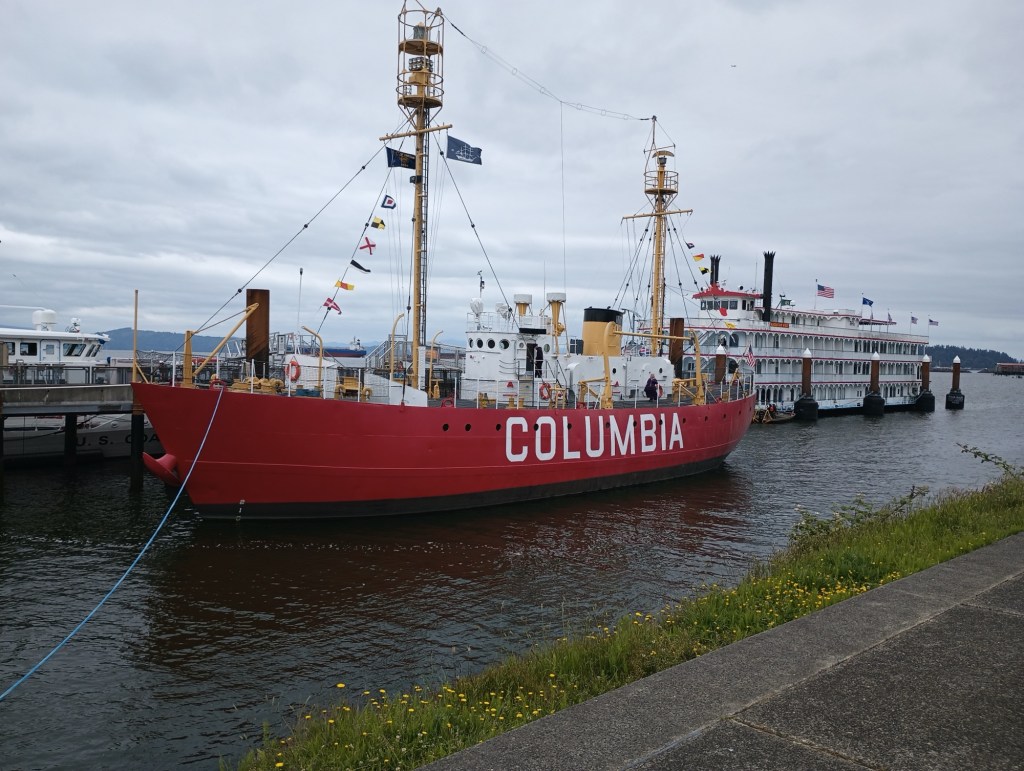
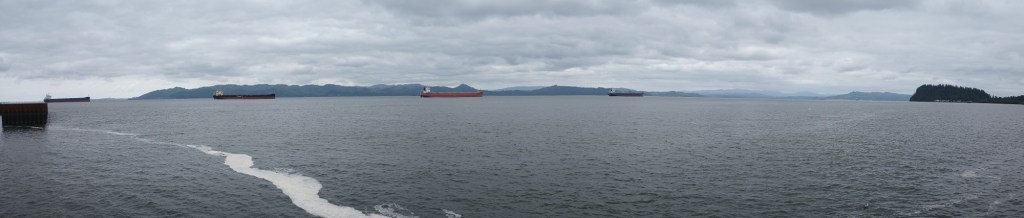
Before we got our feet wet, as we crossed the border between Washington and Oregon, we came to the mighty Columbia River. It’s quite impressive and beautiful. It’s deep and swift and crashes into the Pacific Ocean. There is what they call a “bar” at the mouth of the Columbia where it meets the ocean. It’s turbulent and dangerous and requires a pilot to board to navigate a ship beyond the bar and into the river.
From there, the Columbia is so deep that large ocean going ships can travel 50 miles up the river to a large port in a town called Longview, OR. It’s here that much of the lumber from the region is shipped.
Longview portThe Columbia River
Jane
(Written at the Historic Timberline Lodge, Mt Hood, OR)
David and Jane set out from Baltimore on May 18, 2025 for another big travel. This time, our “big” rig, The Tramper, is in temporary repose in West Virginia. Instead we’re in a 2010 Honda Odyssey, fitted out with a bed and lots of camping supplies. The Odessey, named Helen, is more nimble, frugal and stealthy than The Tramper. All good for a shorter trip.
In September 2012, David and Jane quit their jobs and traveled the country in their 1957 Yellowstone trailer, mountain biking, hiking, paddling, skiing and learning along the way. We carved out a 6 month sabbatical! It was AWESOME! Now, we’re back home and still blogging about the impact of our fabulous trip. And random stuff…
























 The Voyage of the Tramper